

Linear TV viewership in North Asia up but ad spends down - APB+ News

APB+ News

APB AWARDS - NOMINATE NOW!

[master-leader-web]
[master-leader-mob]

Linear TV viewership in North Asia up but ad spends down

Add Your Heading Text Here

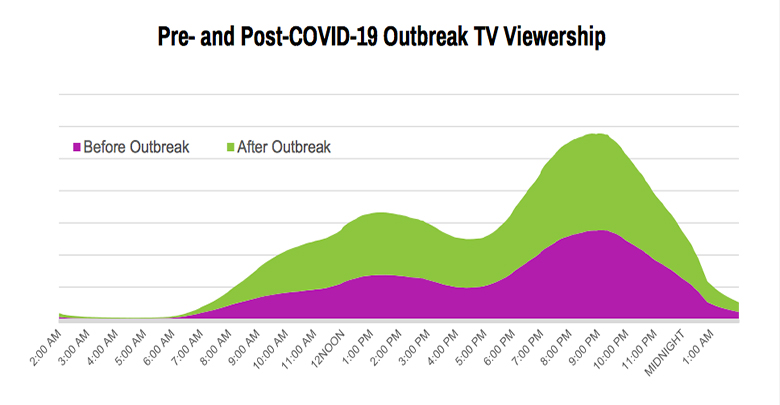
Linear TV
consumption is bucking the trend and growing amongst viewers in North Asia as
more people are staying home as COVID-19 rages on. In Taiwan and South Korea, linear
TV viewership grew as well as viewing time.

According to a
report by Nielsen
Media, during the first three weeks of February, Taiwan’s TV audience grew by one
million viewers to about 21 million.

However,
despite the higher media consumption, a significant number of advertisers have
pulled back their advertising campaigns and others deferred their ad campaigns
in an effort to bring investment in line with consumer consumption and
sentiment.

Citing
results by its Chinese research partner CC Data, Nielsen said TV consumption
also expanded considerably in China as well as Hong Kong. While increased TV
viewing each day was expected, the size of the increase was unprecedented, rising
by 70 minutes to 7 hours and 40 minutes per day among current TV viewers, with
news and drama genres experiencing the most viewership growth.

In Hong Kong, TV viewership increased by 43% in
February compared with February 2019, while primetime ratings during the same
period increased by 44%.

Nielsen
noted that there is a clear correlation between time at home and media
consumption and believes the pull-back in advertising is a misstep, with the
increased media time becoming a new “prime” time for brands to build and
interact with a captive audience.

In
both Taiwan and South Korea, news channels and children’s programming were the
primary beneficiaries of the increased viewership. Many children, home from
school and forced to stay indoors, quickly gravitated to their TV screens while
their parents were constantly monitoring news reports on the spread of the
coronavirus and its impact on the world’s economies, particularly how lockdowns
were impacting their lives and livelihoods.

Ranjeet
Laungani, managing director, North Asia, Nielsen Media, said: “The knee-jerk
reaction from advertisers at a time of crisis is typically to pull back or
defer ad spends.

“However,
COVID-19 is characterised by a situation where increased time at home means expanded
media time and heightened consumer attention.

“For
brands looking to authentically connect with their consumers during this
difficult time and offer a solution, this is the time to lean in.”

North
Asian countries were highlighted by Nielsen as they were the first region to be
affected by the COVID-19 outbreaks and one of the first to feel the effects of
social distancing and lockdowns.

Nielsen
hopes the insights from the early days of the global pandemic can help the
industry to think ahead and respond to market needs and consumer behaviour today
in preparation for the release of pent-up need for retail therapy tomorrow.

Join The Community

Join The Community

Linear TV viewership in North Asia up but ad spends down

Add Your Heading Text Here

Linear TV
consumption is bucking the trend and growing amongst viewers in North Asia as
more people are staying home as COVID-19 rages on. In Taiwan and South Korea, linear
TV viewership grew as well as viewing time.

According to a
report by Nielsen
Media, during the first three weeks of February, Taiwan’s TV audience grew by one
million viewers to about 21 million.

However,
despite the higher media consumption, a significant number of advertisers have
pulled back their advertising campaigns and others deferred their ad campaigns
in an effort to bring investment in line with consumer consumption and
sentiment.

Citing
results by its Chinese research partner CC Data, Nielsen said TV consumption
also expanded considerably in China as well as Hong Kong. While increased TV
viewing each day was expected, the size of the increase was unprecedented, rising
by 70 minutes to 7 hours and 40 minutes per day among current TV viewers, with
news and drama genres experiencing the most viewership growth.

In Hong Kong, TV viewership increased by 43% in
February compared with February 2019, while primetime ratings during the same
period increased by 44%.

Nielsen
noted that there is a clear correlation between time at home and media
consumption and believes the pull-back in advertising is a misstep, with the
increased media time becoming a new “prime” time for brands to build and
interact with a captive audience.

In
both Taiwan and South Korea, news channels and children’s programming were the
primary beneficiaries of the increased viewership. Many children, home from
school and forced to stay indoors, quickly gravitated to their TV screens while
their parents were constantly monitoring news reports on the spread of the
coronavirus and its impact on the world’s economies, particularly how lockdowns
were impacting their lives and livelihoods.

Ranjeet
Laungani, managing director, North Asia, Nielsen Media, said: “The knee-jerk
reaction from advertisers at a time of crisis is typically to pull back or
defer ad spends.

“However,
COVID-19 is characterised by a situation where increased time at home means expanded
media time and heightened consumer attention.

“For
brands looking to authentically connect with their consumers during this
difficult time and offer a solution, this is the time to lean in.”

North
Asian countries were highlighted by Nielsen as they were the first region to be
affected by the COVID-19 outbreaks and one of the first to feel the effects of
social distancing and lockdowns.

Nielsen
hopes the insights from the early days of the global pandemic can help the
industry to think ahead and respond to market needs and consumer behaviour today
in preparation for the release of pent-up need for retail therapy tomorrow.

Join The Community

Stay Connected

Facebook

101K

Twitter

3.9K

Instagram

1.7K

LinkedIn

19.9K

YouTube

0.2K

Subscribe to the latest news now!


    Scroll to Top