



By Shirish Nadkarni
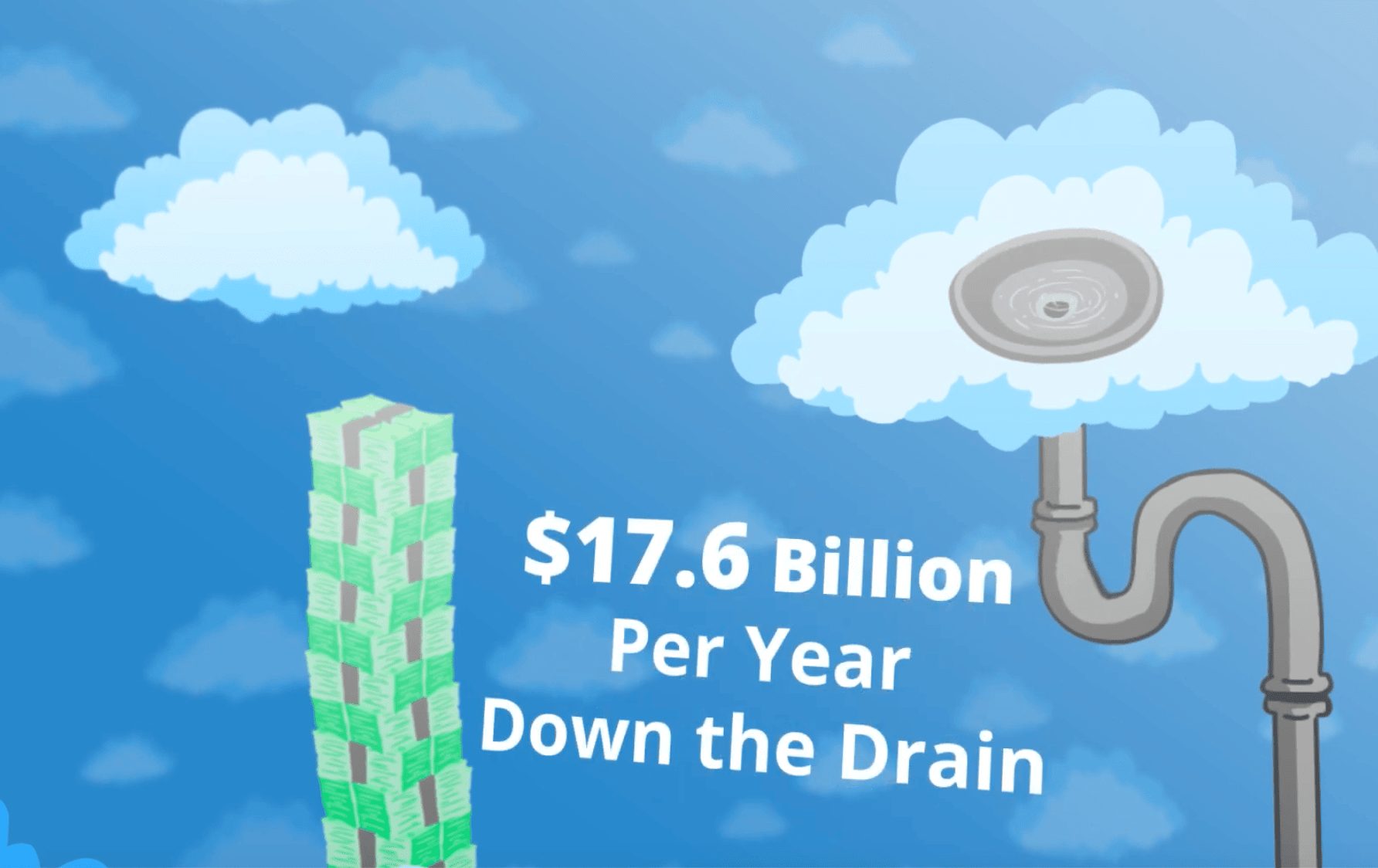
Cloud waste refers to purchases of cloud resources that go unused or underused. The resulting wasteful spending increases operating costs without adding value, and precludes using those same funds in other areas of the business. In 2020, respondents to a survey reported that 30% of cloud spend was being wasted. According to experts at ParkMyCloud, it amounted to $17.6 billion down the drain! Other market watchers, such as Accenture, put the rate of waste even higher – closer to 40%. It’s about time broadcasters start considering cloud cost management a top priority.
Traditionally, the technology concerns of every TV broadcast operation consisted of the following priority parameters — video latency, video quality, quality of service, resilience and reliability, and cost.
For many years, these were the fundamental technological challenges anyone working with TV broadcasters had to meet, until the pace of TV technology innovation sped up and a new priority joined the list — flexibility. This meant the ability to experiment with new business models and make changes quickly, at low cost, and at low risk.
The emergence of the Big Three
While the concept was technically launched in the mid-1990s, cloud computing became mainstream beginning in the mid-2000s, with the emergence of the “Big Three” — namely, Google Cloud Platform, Microsoft Azure and Amazon Web Services (AWS).
The flexibility of the cloud, combined with these new media services, gave TV broadcasters new choices and opportunities they did not have earlier.
As new video codecs, container formats and other improvements emerged, TV broadcasters had the flexibility to take advantage of them and, most importantly, to scale to a certain extend resource use up and down as and when needed. Purpose-built media services available in the cloud began providing an alternative to long and locked hardware refresh cycles.
When TV broadcasters talk about cloud broadcasting, merging traditional broadcast with OTT (Over-The-Top) is typically what they are looking for, the aim being to have a single TV broadcast technology stack for distribution to simplify operations and reduce costs.
It has been ascertained that 94% of enterprises are using the cloud today. Right Scale stated as far back as 2019 in its annual State of the Cloud Report that 91% of businesses were using public cloud and 72% using private cloud. They spent more than $50 billion in the process.
Opting for a hybrid cloud solution
Most enterprises actually utilise both options – with 69% of them opting for a hybrid cloud solution, according to Brad Beam, Senior Software Engineer at StormForge, an optimisation platform that claims to solve the Kubernetes efficiency challenge holistically.
With Kubernetes, broadcasters became more confident using cloud technology to ingest, move and retrieve TV content. However, a cloud broadcaster starting a channel with content rights will still need to assemble the content into a sequential schedule of events, or a playlist, for linear playout.
For example, Brightcove Cloud Playout is a studio module that can enable a broadcaster to program a scheduled playout of items from its VoD (video-on-demand) catalogue, combined with live feeds, and stream it as a linear channel all with the reliability and scalability of Brightcove Live.
With the advent of 5G and popularity of social media, TV broadcasters have to quickly aggregate live content such as news, sports, live shows as well as studio productions and almost instantly distribute them through broadcast affiliates such as local TV stations, cable headends/multichannel video programming distributors (MVPDs) such as Comcast, and newer digital MVPDs such as Hulu. All this can be done via cloud services.
Indeed, cloud’s massive advantage is flexibility — cloud playout allows broadcasters to introduce a new channel or adapt an existing one with a minimised lead time, making it easier to implement changes and react to market conditions. And one of the main reasons why companies are making this move is to save money. They intend to lower their operational costs by shifting part or all of their IT infrastructure and applications to the cloud.
The decision to migrate to the cloud must be making good business sense that comes with a clear and compelling ROI (return on investment), because many CFOs (chief financial officers) and other top executives have signed off on it.
Effect on the environment
Another aspect of cloud computing that is getting more recent public attention is the negative effect on the environment. Although most people don’t realise it, the cloud industry is becoming one of the biggest environmental challenges and one of the most overlooked contributors to climate change.
Within a matter of years, data centres became one of the largest annual energy consumers and emitters of carbon pollution. Data centres currently represent roughly 3% of the world’s total energy consumption and they emit nearly 100 million metric tons of carbon dioxide (CO2) into the atmosphere each year.
Cutting wasteful cloud purchases is obviously a good idea. So is doing the right thing by the environment. But organisations of all kinds now rely heavily on their cloud infrastructures, so making changes can be complicated and risky.
It does not have to be that way, however. Organisations can, with a bit of concerted effort, lower their cloud waste while maintaining their operational efficiency and agility, and reducing their carbon footprint. It is a whole-of-industry approach that should be made conscious to all organisations.
If all cloud broadcasters strive to reduce their cloud waste, there are bound to be better business savings … and saving our environment as well.
Question: As data centres are now one of the largest energy consumers and emitters of carbon pollution, emitting nearly 100 million metric tons of CO2 into the atmosphere a year, how best can broadcasters reduce cloud waste?
Please send your suggestions to maven@editecintl.com.