

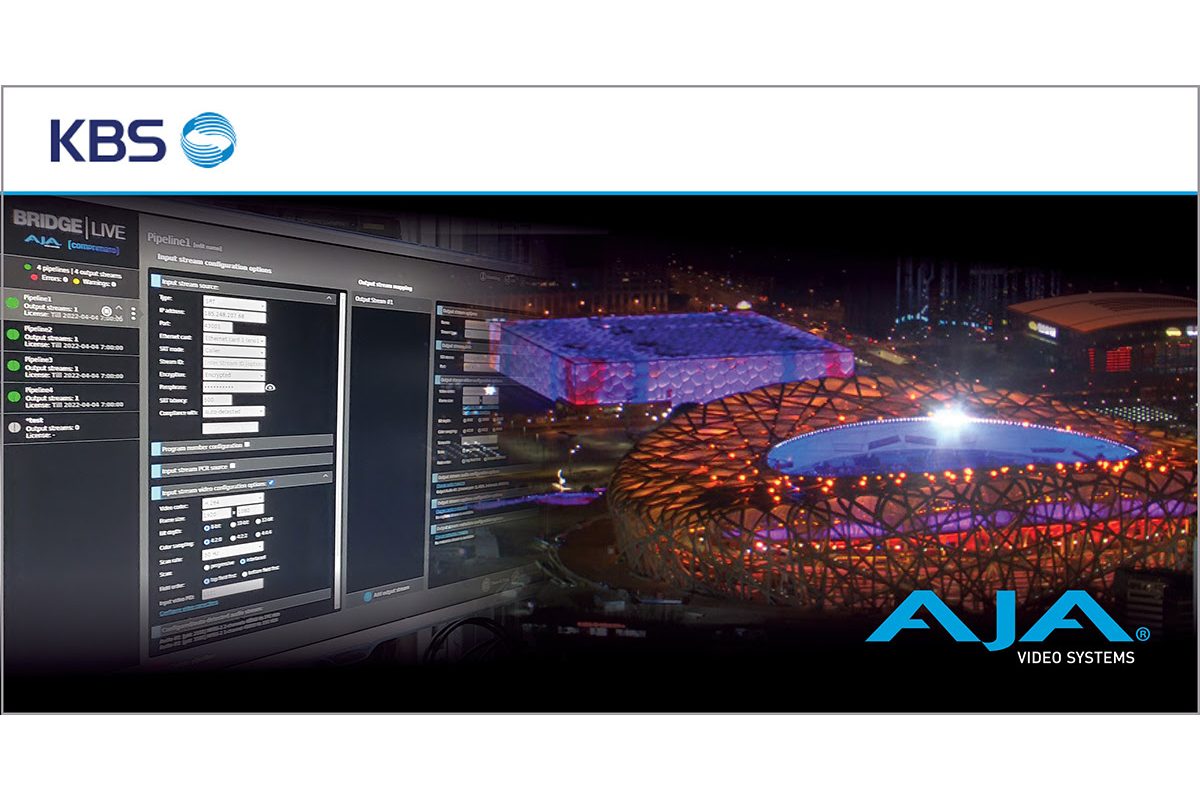
KBS forsakes SRT configuration for AJA BRIDGE LIVE - APB+ News

APB+ News

[the_ad id="929859"]
[the_ad id="929738"]

APB AWARDS - NOMINATE NOW!

[master-leader-web]
[master-leader-mob]

KBS forsakes SRT configuration for AJA BRIDGE LIVE

Add Your Heading Text Here

Korean Broadcasting System (KBS), Korea’s largest public broadcaster, has leveraged a cloud-based broadcasting system to enable remote production, rather than relying on dispatching local crews and broadcast facilities as it had in the past. The broadcaster has established a workflow comprising an AJA BRIDGE LIVE multi-channel live video solution for remote production, contribution, collaboration, streaming and delivery.  

Previously, KBS leveraged an SRT-equipped workstation or IP equipment to support monitoring and return signal configuration for remote broadcasts, which resulted in less than desirable picture and sound quality. In exploring alternatives, bandwidth proved a key consideration for the KBS team, as moving to the cloud would require a stable receivable bandwidth of at least 100Mbps. 

Offering encoding and decoding of H.264, H.265, MPEG-2, JPEG-2000, and NDI codecs up to UltraHD 60p, AJA BRIDGE LIVE is able to easily manage the bandwidth required for a live cloud signal, and has been supporting KBS’ Integrated Broadcast Broadband (IBB) service, as well as domestic and international broadcasts.

Park Kwon-Soon, Technical Director, Broadcast Systems Department, KBS, said, “BRIDGE LIVE provides incredibly stable network bandwidth for our workflow, which is essential in live broadcasting environments. It is durable and delivers truly exceptional performance, unlike anything we’ve seen before.” 

Reflecting on the new capabilities of KBS’ workflow, Park added, “BRIDGE LIVE gives us more flexibility across the production chain with support for multiple channels of input/output, as well as a wide range of streaming protocols, such as RTMP, HLS, and SRT.

“We’ve just begun to uncover its potential and can’t wait to continue exploring its broad feature set.” 
Categories: APB+ | News & Events
[the_ad id="929856"]

Join The Community

[the_ad id="929828"]
[the_ad id="929838"]
[the_ad id="929840"]

Join The Community

[the_ad id="929842"]

TDM

x Studio

Connect with your clients by working with our in-house brand studio, using our expertise and media reach to help you create and craft your message in video and podcast, native content and whitepapers, webinars and event formats.

KBS forsakes SRT configuration for AJA BRIDGE LIVE

Add Your Heading Text Here

Korean Broadcasting System (KBS), Korea’s largest public broadcaster, has leveraged a cloud-based broadcasting system to enable remote production, rather than relying on dispatching local crews and broadcast facilities as it had in the past. The broadcaster has established a workflow comprising an AJA BRIDGE LIVE multi-channel live video solution for remote production, contribution, collaboration, streaming and delivery.  

Previously, KBS leveraged an SRT-equipped workstation or IP equipment to support monitoring and return signal configuration for remote broadcasts, which resulted in less than desirable picture and sound quality. In exploring alternatives, bandwidth proved a key consideration for the KBS team, as moving to the cloud would require a stable receivable bandwidth of at least 100Mbps. 

Offering encoding and decoding of H.264, H.265, MPEG-2, JPEG-2000, and NDI codecs up to UltraHD 60p, AJA BRIDGE LIVE is able to easily manage the bandwidth required for a live cloud signal, and has been supporting KBS’ Integrated Broadcast Broadband (IBB) service, as well as domestic and international broadcasts.

Park Kwon-Soon, Technical Director, Broadcast Systems Department, KBS, said, “BRIDGE LIVE provides incredibly stable network bandwidth for our workflow, which is essential in live broadcasting environments. It is durable and delivers truly exceptional performance, unlike anything we’ve seen before.” 

Reflecting on the new capabilities of KBS’ workflow, Park added, “BRIDGE LIVE gives us more flexibility across the production chain with support for multiple channels of input/output, as well as a wide range of streaming protocols, such as RTMP, HLS, and SRT.

“We’ve just begun to uncover its potential and can’t wait to continue exploring its broad feature set.” 
Join The Community

[the_ad id="929855"]
[the_ad id="929837"]
Stay Connected

Facebook

101K

Twitter

3.9K

Instagram

1.7K

LinkedIn

19.9K

YouTube

0.2K

[the_ad id="929822"]
[the_ad id="929841"]

Subscribe to the latest news now!


    Scroll to Top