


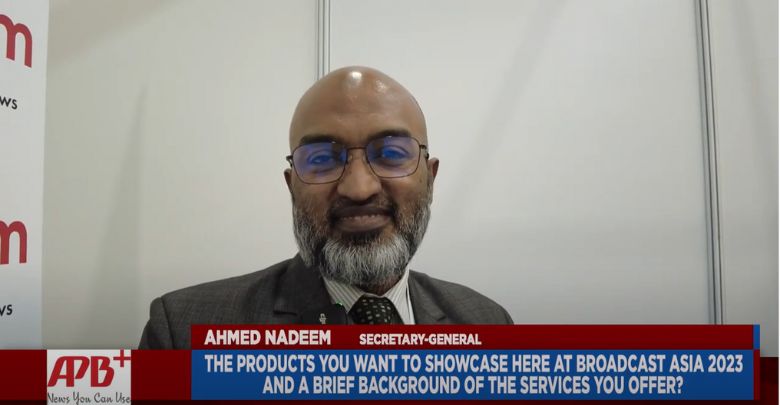
Ahmed Nadeem, the Secretary-General of the Asia-Pacific Broadcasting Union (ABU), revealed the challenges faced by broadcasters in the region during an interview at the BroadcastAsia Show 2023. Having assumed his role in April, Nadeem shared his insights after two months on the job.
In the interview, Nadeem acknowledged the difficulties encountered by national broadcasters, primarily due to the ever-evolving media landscape and the impact of the global pandemic. He emphasized the industry's struggle to keep up with the rapid changes brought about by the widespread availability of broadband and the emergence of new players with substantial resources. Traditional broadcasters, such as ABU members, are finding it increasingly arduous to adapt to shifting trends and changing consumer preferences.
"The biggest difficulty in the industry that our broadcasters are facing at the moment is keeping up with the change in technology," Nadeem explained. "The pace at which technology is changing now makes it extremely difficult to reinvent oneself quickly. Adaptation is crucial."
One significant factor contributing to the industry's challenges is the advent of internet streaming, which has broken down geographical barriers and made content accessible worldwide. Nadeem highlighted the intense competition that arises from this borderless content, emphasizing that broadcasters must compete with a vast array of choices available at consumers' fingertips.
"We are witnessing a multi-fold increase in competition," Nadeem noted. "The industry now faces the daunting task of understanding the evolving preferences and consumption habits of viewers. Content is no longer confined to countries or cities; it has become global."
When asked about the ABU's role in establishing industry standards, Nadeem explained that they collaborate extensively with organizations such as the International Telecommunication Union (ITU) and the Consumer Technology Association (CTA) to promote standards. Their objective is to create a harmonious and common framework for technologies employed in broadcasting. However, Nadeem acknowledged the challenges they face due to the strong inclination towards proprietary technologies among industry players.
"Everybody wants to go proprietary," Nadeem lamented. "It's a difficult task to maintain harmony when each entity favors its own technology. Ultimately, the economy and economies of scale determine which technologies and standards will prevail."
Despite the difficulties in enforcing specific standards, Nadeem stressed that the ABU remains neutral and aims to support the industry's growth within individual countries. They work towards fostering collaboration and knowledge exchange while recognizing that each nation's unique circumstances and market conditions influence technological choices.
As the broadcasting industry continues to grapple with the rapid pace of technological advancements, Nadeem highlighted the importance of adaptability and reinvention for broadcasters to remain relevant in the evolving media landscape. The ABU, through its collaborative efforts and neutral stance, strives to navigate these challenges and support its members as they navigate the complex and dynamic broadcasting environment.