


Cinegy GmbH, the Germany-based provider of software technology for digital video processing, asset management, video compression and automation, and playout, has provided all the core functionality for a new broadcast centre for the TV and Radio Complex of the President of the Republic of Kazakhstan (PTRK).
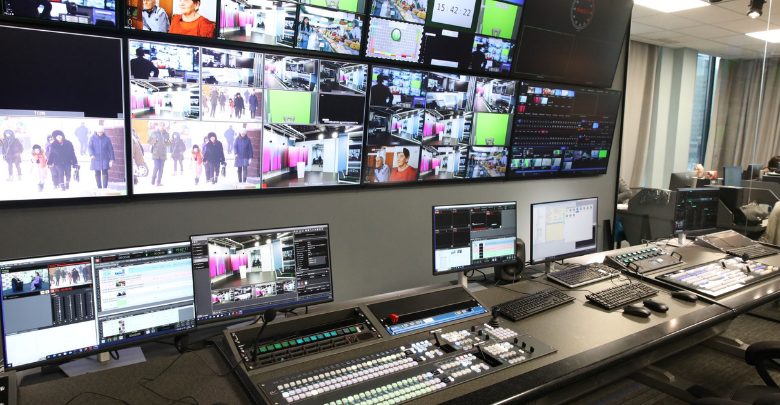
The project, led by DNK Kazakhstan, Cinegy’s systems integration partner in that country, brings all aspects of two major channels – Jibek Joly TV and Silk Way – into a new building in Almaty.
Jibek Joly and the international service Silk Way were previously based in separate locations, and used a variety of systems for production and playout. In moving to a new headquarters, the aim was to provide a common working environment for news, production, playout and archiving. The solution is unique in being able to provide everything needed in a single environment.
Yernar Ibragimov, Chief Technology Officer of PTRK, said, “One of the critical advantages of Cinegy is that it is very user friendly. The intuitive design makes the system easy and efficient, significantly speeding up the training process for new employees.
“Today, about 100 Cinegy users work simultaneously, and we produce as much as 40 hours of content daily.”
DNK Kazakhstan developed a proof-of-concept system for PTRK, then supplied all the hardware and software licences for the full system. It includes Cinegy Air PRO for playout, Cinegy Convert PRO for signal processing, along with the Cinegy Multiviewer, Cinegy Route, Cinegy Prompter and Cinegy Archive Enterprise. More than 75 Cinegy Desktop licences are also included.
Mike Efimov, International Sales Manager for Cinegy, added, “With Cinegy, the customer can handle all content production stages in a single infrastructure. This allows clients to focus on the creative aspects without worrying about the complexities of integrating different systems.
“What it means for the production and broadcast teams within PTRK is efficiency. By eliminating the need to hand over work off from one system to another, it speeds everything from editing to publishing. It also means you do not need to store content in multiple locations, so media management and storage is much more efficient, saving the cost of hardware and the space to operate it.”