


The most competitive will be those who balance innovation with operational pragmatism.
Cloud-based broadcasting is rapidly evolving, offering broadcasters flexibility, scalability, and cost-effectiveness, whilst enabling new forms of content delivery and fan engagement.
One major area in cloud-based broadcasting that has recently seen rapid growth is remote media production, a solution that enables production houses and remote teams to continue creating high-quality content without the need to be physically present in one location.
Accelerated by the adoption of the remote work trend, remote media production offers broadcasters reduced costs, more flexibility, and the opportunity to tap into a global talent pool that can collaborate from anywhere without compromising the quality or security of content.
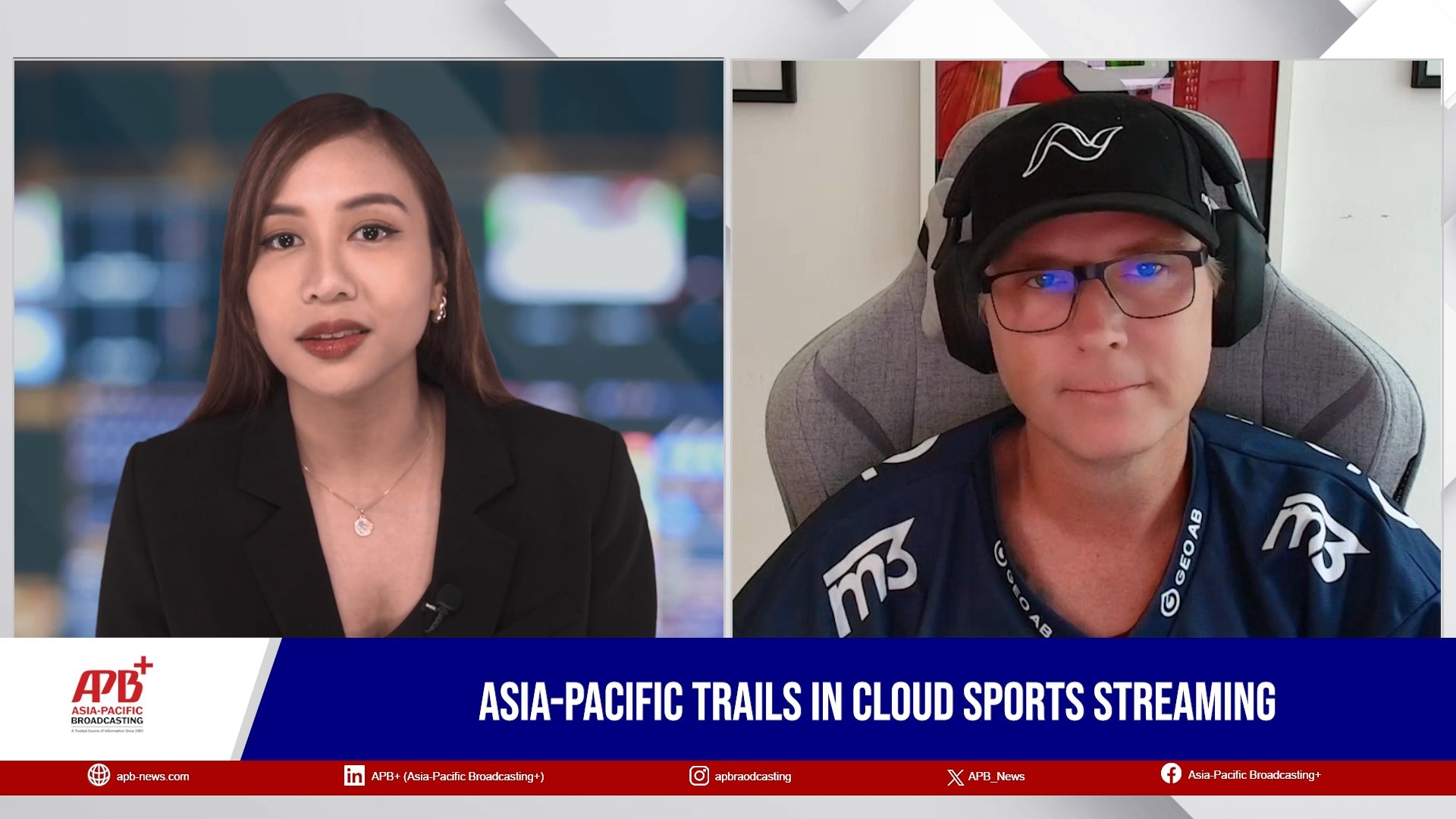
“We're actually seeing a good growing momentum in several regional service providers that are using our technology, and they are doing a managed solution,” said Kenth Andersson, Senior Vice President, Sales, Head of APAC, Net Insight during an interview with Asia-Pacific Broadcasting+ (APB+).
Supporting large-scale live production
In the exciting world of sports broadcasting, a robust cloud-based technology infrastructure is proving to be a new key element to capture, process, and deliver high-quality content to today’s viewers, who are constantly hungry for new, high-octane content.
Outside of the cameras, video processors, video mixers, and audio-video delay units for live broadcasts, creating a large-scale, live sports production requires a foundation of powerful data centres and high-capacity IP links.
“In Singapore, Malaysia, Thailand, and other regions, we're seeing a major investment in local cloud infrastructure,” Andersson added, noting that “the global provider is establishing quite powerful data hubs combined with the one gig and 10 gig and even higher bandwidths and IP links directly to the venues.
“The technical foundation is already in place. The key now is connecting the dots, building the workflows to tap into this infrastructure and enabling producers to work seamlessly from virtually anywhere, whether it's a centralised studio or a laptop on the moon.”
Showcasing media transport solutions
Last February, a major winter sporting event enabled Net Insight to demonstrate the power of its media transport solutions to deliver high-quality video services across Asia.
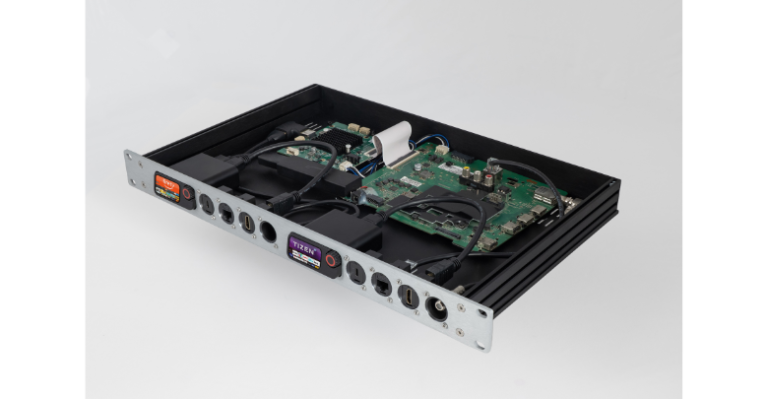
Commissioned by Oranda, a media production company in Singapore that specialises in live sports events, Net Insight delivered the order for a Nimbra 400 media network device and Nimbra Edge cloud-based IP media transport solution to provide seamless, reliable, and high-performance video distribution.
Oranda was able to fully control its media workflow from its remote production facility in Singapore through the Nimbra Edge platform, managing the ingress and egress of video feeds using Net Insight’s Nimbra 400. This combination of hardware and software supported low-latency, high-quality, and cost-efficient content delivery to broadcasters and rights holders across Asia, maximising audience engagement for one of the most exciting winter sports events of the year.
Although the order value is modest, Oranda will benefit from recurring revenue with the potential to grow over time based on their usage of the devices.
“Net Insight’s solution was instrumental in delivering seamless, high-quality remote production for this major winter sports event,” says Floris Molijn, CEO and Managing Director at Oranda.
Realising full cloud adoption in APAC
With these accomplishments, the development of these solutions is not without its challenges.
“The main hurdles, as we see, are more on the infrastructure variability and limited technical resources,” said Andersson. “So many of the tier two and three leagues operate with constrained budgets, and they're obviously smaller teams, so making the shift to cloud can seem quite complex or costly upfront.”
As the competition heats up to give audiences more engaging captivating content, broadcast organisations are urged to open their minds and their purses and explore what the latest solutions can offer.
“In more developed markets, we're already seeing hybrid models, where control rooms are centralised but leverage the cloud to scale up or spin out regional content,” Andersson explained. “In emerging markets, full cloud may lead to traditional remote production because it removes the need for heavy on-site investments.”
Advancements in IP-based transport protocols like Secure Reliable Transport (SRT) have matured to a point where latency and reliability are no longer the bottlenecks for live sports.
However, Andersson reiterates that it's not like one size fits all. Whilst some broadcasts are ready for full cloud adoption today, others could benefit from a hybrid setup as they refine traditional workflows that bridge the gap to the cloud. “What's important is to start the journey, assess what can move to the cloud, and basically build from there. Hybrid models are practical steps offering flexibility without disrupting everything at once.”
The key, Andersson explains, is flexibility. “The cloud doesn't have to replace everything overnight. It's about integrating it where it makes the biggest impact.”