


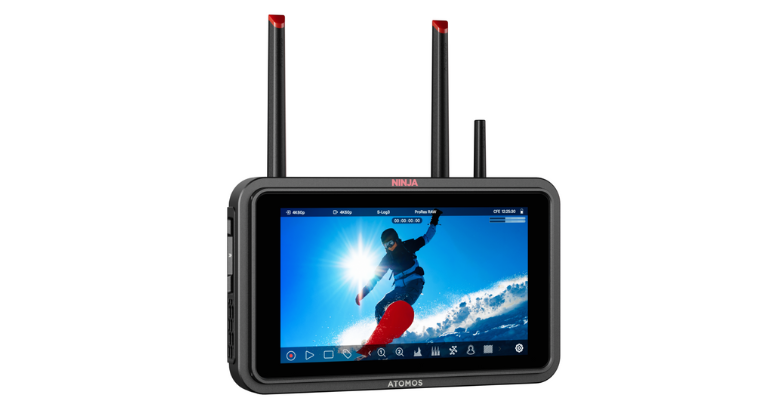
Atomos has introduced the Ninja TX, a newly re-engineered 5-inch monitor-recorder that brings advanced functionality and connectivity to professional content creators. Building on the legacy of the Ninja family, the Ninja TX features both 12G-SDI and HDMI 2.0 inputs and outputs, making it compatible with a wide range of camera systems, a step up from previous HDMI-only models.
Despite its compact size, the Ninja TX packs in features typically reserved for larger devices, such as the Shogun Ultra. It supports ultra-fast CFexpress Type B cards and direct-to-disk recording via USB-C, offering flexibility for various shooting environments. The device comes pre-activated with major codecs including Apple ProRes, ProRes RAW, Avid DNx, and H.265/H.264, enabling users to start recording immediately in their preferred format.
The screen boasts a 1,500-nit brightness level, 50% brighter than other Ninja models, and includes professional monitoring tools like waveform, vectorscope, EL ZONE false colour, and focus peaking to ensure precise control over shots. A new industrial design enhances thermal efficiency and durability, while maintaining the device's lightweight and highly portable nature.
Connectivity is a key focus of the Ninja TX. With integrated Wi-Fi 6E, Bluetooth, and Atomos’ AirGlu timecode sync technology, the device is built for cloud-based workflows. Users can upload footage directly to Frame.io, Dropbox, or stream via NDI 6/HX3 to support faster collaboration and content delivery.
Powered by the Linux-based AtomOS, the Ninja TX offers faster performance, over-the-air firmware updates, and a more streamlined user experience. Dual USB-C ports and a new locking mechanism for HDMI and USB-C cables further enhance workflow reliability.
Peter Barber, CEO of Atomos, said, “While it may look similar at first glance, Ninja TX is a completely new product, re-engineered from the ground up. There’s nothing carried over from previous models. The mechanical design, electronics, and thermal system have all been rebuilt to make this possible.”