


Freeview Australia is preparing to test DVB-I technology locally from early 2026, signalling a major evolution in how Australians access free-to-air (FTA) TV as viewing continues to shift towards Internet-connected devices.
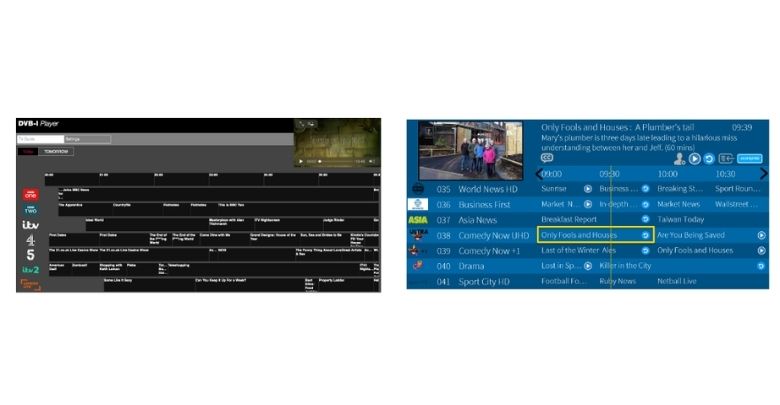
The trial will explore delivering the full suite of linear channels from ABC, SBS, Seven, Nine and Ten over broadband rather than traditional broadcast signals. Viewers will be able to navigate live FTA channels through the Freeview interface — complete with recognised channel numbers and programme guides — regardless of whether their TV is connected to an antenna.
With modern apartment living increasingly limiting rooftop aerial access and audiences consuming a growing share of content online, Freeview sees DVB-I as a way to simplify the viewing experience.
Today, audiences often need to move between multiple apps and operating systems to access free channels. DVB-I aims to deliver a unified, broadcast-like experience over IP, consolidating all services into a single guide.
Dean Dezius, General Manager, Freeview Australia, said, “Our goal is simple: ensure every Australian can easily find and watch his or her favourite free TV channels, whether their TV has an antenna or not.
“No more juggling apps or inputs. Everything in one place, for free.”
The testing will be conducted at the Freeview Test Centre in Sydney in partnership with TCL, Hisense, and Philips, alongside technology partner Switch Media. The programme will focus on validating technical capability, user experience consistency and delivery quality across different smart TV platforms.
For broadcasters, the move is not merely about convenience, it is about future-proofing FTA TV in an increasingly fragmented and app-driven content ecosystem. Around the world, public and commercial broadcasters are taking similar steps to ensure free TV remains prominent and easy to access as linear viewing migrates online.
In the UK, the BBC, ITV, Channel 4 and Channel 5 launched Freely in 2024 to provide Internet-delivered access to live channels, while comparable initiatives are taking shape across Europe and New Zealand.
“This is about protecting what makes Australian TV special — trusted, free content that’s easy for everyone to access,” added Dezius. “As technology evolves, we’re making sure free TV evolves with it.”
Public broadcasting considerations are also central to the initiative. Damian Cronan, Chief Digital Officer at ABC and Freeview board member, said DVB-I represents an important pathway to ensuring the ABC’s universal accessibility mandate keeps pace with technological change.
“For the ABC, ensuring universal access to public broadcasting is fundamental to our charter,” Cronan said. “This technology Freeview test will provide a pathway to reach any Australian household with an Internet-connected TV, regardless of antenna availability or geographic location.
“This validation programme will demonstrate the industry’s commitment to maintaining free, accessible TV for all Australians as technology evolves.”