


BY YVONNE MONTERROSO
With broadcasters under pressure to produce more content from more locations with fewer resources and in shorter spaces of time, remote production teams in the field are in need of reliable solutions to integrate their workflows with the central broadcast facility, and ultimately increase their productivity.
More specifically, remote teams are increasingly dependent on reliable Internet connectivity to access and exchange data with their newsroom or production facilities.
Accessing the Internet, private networks and data secured behind corporate firewalls remains a challenge. Their ability to connect wherever they are — to research stories, access media assets, and transfer files — is becoming paramount.
In the past, this was often impractical without advanced planning to establish links, and network engineers to set them up.
If a reporter is also tasked with editing in the field, the station will often put b-roll and graphics onto a disk for a driver to courier to the breaking news scene. The driver waits around for the news package to be edited and then returns to the station with the disk — dealing with traffic and varying weather conditions along the way. This is the old way of bi-directional data transportation, which can take hours.
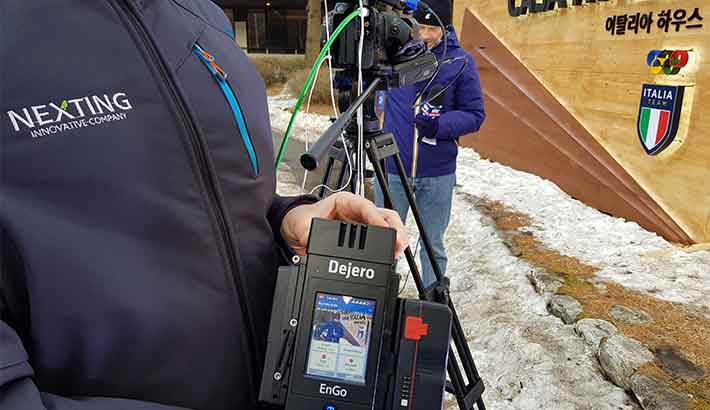
By utilising Dejero’s GateWay connectivity solution, a network blending router installed in a production vehicle or racked in a mobile REMI cart — combined with cellular connectivity services that bring fast, reliable and secure Internet access in the field — teams can view return video feeds, connect a VoIP phone, access MAM systems, or conduct research online from anywhere in the world.
Monterroso’s full article is available in the APB June 2018 issue.