


By Shirish Nadkarni
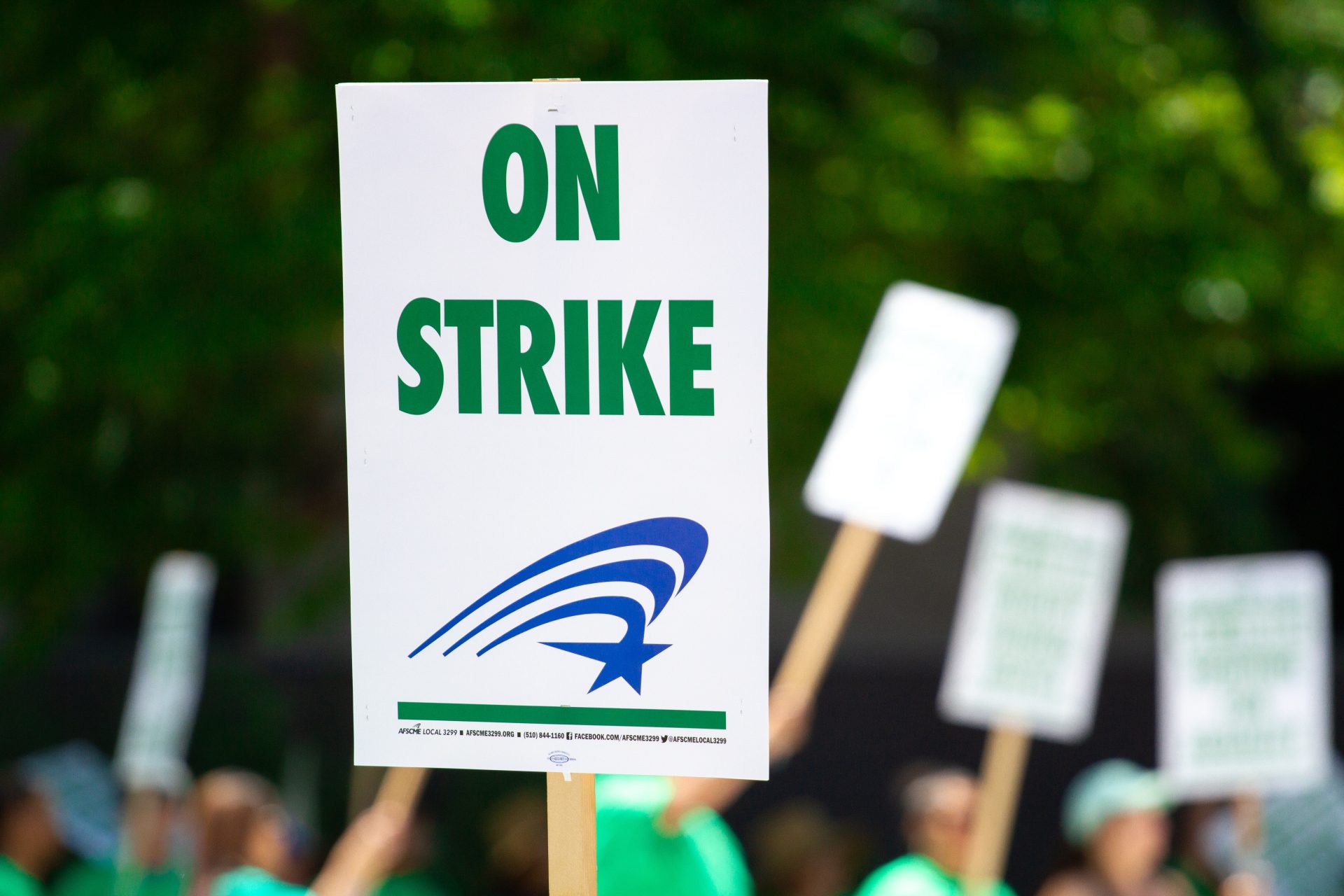
The Writers Guild of America (WGA), representing 11,500 screenwriters, went on strike on May 2 over an ongoing labour dispute with the Alliance of Motion Picture and Television Producers (AMPTP). The screenwriters, authors and journalists were increasingly concerned about the potential threat that Artificial Intelligence (AI) poses to their livelihoods. While generative AI tools are not advanced enough to completely replace human writers today, their unregulated use could have negative implications for the writing profession.
Members of the WGA members, who script the content for television shows, movies, news programmes, documentaries, animation and Internet and mobile phones – have been continuing their agitation over the past three months, making it the largest labour stoppage the WGA has recorded since its 93-day strike in 2007-08.
The current strike involves a long list of concerns that the writers want Hollywood studios to take a long, penetrating look at – from addressing the use of AI to the low remuneration involved in writing streaming series, to reining in “mini-rooms” used to skirt contractual pay practices.
What is a “mini-room” and why WGA members hate it so much that it is becoming a sticking point?
According to George R.R. Martin, a prominent screenwriter, who strongly disavowed the mini-room on his personal website, getting rid of the Hollywood mini-room "is the most important of the things that the Guild is fighting for”.
He wrote, "Mini-rooms are abominations, and the refusal of the AMPTP to pay writers to stay with their shows through production — as part of the JOB, for which they need to be paid, not as a tourist — is not only wrong, it is incredibly short-sighted.
"If the story editors of 2023 are not allowed to get any production experience, where do the studios think the showrunners of 2033 are going to come from?
“If nothing else, the WGA needs to win on that issue. No matter how long it may take."
Indeed, the ongoing strike – which is on the point of overtaking the length of the WGA agitation of 2007-08 –is jeopardising the long-term contracts created during the media streaming boom when producers were shelling out large sums of money to creative talent. The big studios can now terminate production deals with writers through force majeure clauses after 90 days, allowing them to use AI to complete the partially written scripts or writing fresh ones, and saving them millions of dollars.
Will the AI bots be able to match, or exceed, the creativity of human writers who cater mainly to viewers of streaming content? Will the scripts and screenplays turned out via AI have the same element of human touch?
How deep will AI disrupt the film and TV industry, and how profoundly will it adversely affect the human creative process?
A new report entitled “Reading Between the [Picket] Lines” from global insights and strategy firm National Research Group (NRG) reveals that streaming viewers largely support the WGA strike, but are cautiously open to the use of AI in the entertainment industry.
The findings are based on a survey of 3,000 US consumers, aged 13-54, who subscribe to at least one streaming service and consume a minimum of four hours of streaming content per week.
While more than 60% of respondents were aware of the strike, only 13% felt they had a comprehensive understanding of the strike and its underlying reasons. Among those who felt they understood “a lot” about the strike, a staggering 74% said that they supported the WGA’s decision to strike.
When it comes to the role of generative AI in the entertainment industry, viewers are yet to fully make up their minds about where they stand. Media coverage of the strike has been intense, even as public sympathy for the WGA has been increasing as stored content in the studios dwindles. More than two-thirds of the respondents have expressed concern about the use of AI in Hollywood.
“To me that is an early warning sign of a potential backlash if studios are seen to be using AI specifically for the strike,” said Katie Kelley, NRG’s Executive Vice-President of Content & Strategy and a former VP of Market Research at Paramount Pictures.
“That would suggest that as media coverage (of the strike) continues, maybe it builds around the strike and those motivations do become a little bit clearer to consumers, than they are able to make up their minds,” she continued. “It would suggest that, as awareness builds, the same level of support will probably pan out in the long run.”
While there’s a contingent who are strongly opposed to the use of AI to write scripts, most viewers are willing to at least wait and see what AI-supported content looks like before deciding how to feel about it.
More than a quarter (28%) said they would be less interested in watching a show if they found out that it had been written with the help of AI. Overall, however, a majority of viewers – nearly six in 10 – said it would have no impact on their willingness to watch a show. This suggests that, for the most part, consumers still have not made up their minds about whether they want to lean in or out of AI-generated content.
Only 12% of those surveyed believed that studios should fully adopt AI to script content with minimal human intervention. In contrast, a third of the respondents (32%) advocated a complete avoidance of AI in the entertainment industry.
Interestingly, a significant 38% see a potential role for AI in the sector, but insist that its use should be responsible and guided by seasoned human screenwriters.
“When you add those together, it means that more than two-thirds either want the industry to avoid using it or only use it under the discretion of humans,” said Kelley. “I think that is a compelling data point.”
For generative AI to successfully carve out a space for itself in the entertainment industry, it is critical that viewers see it as a tool to support human screenwriters – not as a threat to their livelihoods. If studios are seen turning to AI to replace striking writers, this could create a strong public backlash against the technology.
Kelley said the data suggested to her that concern could grow as “awareness builds” and warned that studios using AI to get around the strike or weaken the position of the WGA could end up creating a longer-term barrier to the public’s ultimate acceptance of AI as a screenwriting tool.
“If studios are generally interested in exploring this new technology, I think they need to tread a little carefully during the period of the strike,” she said.
The answers don’t necessarily reflect a deep understanding of the Hollywood production cycle. In fact, movies are the form of entertainment least likely to see any short-term impact.
“That’s because, the way that the sausage gets made is slightly less important to consumers,” quips Kelley. “They’re really going to be evaluating entertainment based on quality at the end of the day.”
The sheer speed at which AI is advancing has shocked most experts in the field, but some consider our fear to be misplaced, and that there is a lot to be optimistic about.
Among the latter group is futurist Sinead Bovell, who feels that whatever we are currently observing about the effect of AI in Hollywood is like the Internet in the early ages of email.
“Since we don’t really know how things are going to transpire, how things are going to evolve, we are tuning in a lot to Hollywood’s version of the future,” said Bovell.
“Of course, some dystopian futures are possible, but I don’t think that’s where we necessarily have to end up. There are a lot of amazing people working on things like AI safety, and alignment. So, I think we have a good shot, if we can get our act together.”
Bovell predicted that nearly a quarter of the workforce would be disrupted by artificial intelligence over the next five years. But that did not necessarily mean their jobs would be eliminated by automation; more like augmented by AI.
“For sure, certain tasks will get automated, but that’s different than an entire job,” she said. “It doesn’t matter what job you’re in, you have to figure out how to start using AI tools.
“Over the next 15 years, most of the jobs likely to be impacted by AI probably haven’t been invented yet. Like a social media manager didn’t exist 15 years ago; but now, if a company doesn’t have one, it’s toast!”
Despite the apprehensions about the livelihood of authors, screenwriters and journalists being adversely affected by the advent of AI in the creative sphere, there is a school of thought that believes the changes that AI will impact on society will not happen as swiftly as some fear.
“This is a centuries-long journey that we’re on,” said Kevin Kelly, former editor of the San Francisco-based monthly magazine Wired, that focuses on how emerging technologies affect culture, the economy and politics. “We’re going to be having this conversation for the next century. So, we have time to adjust and we’re already rapidly adjusting to these things as new versions come out within months.
“The versions are incorporating the objections that people have – whether it is copyright or bias – and that’s one of the reasons it gives me optimism about our ability to control this as we go forward.
“Humans and AI could have a symbiotic relationship, where they feed off each other, and not a parasitic one.”
Proclaiming himself to be “very excited” and “incredibly optimistic” about the future of AI, Kevin Kelly likened the transformative power of AI to electricity, the printing press, and even language.
“I’m optimistic because so far the benefits certainly outweigh whatever negatives and problems there are,” he said. “I think that the problems are smaller and fewer than we think, and I think our capacity to solve the problems are greater than we think.
“ So, just as AI’s problems are new and powerful, our ability and will to solve them is also increasing.”
So, today is the tomorrow we worried about yesterday?