


By Dr Amal Punchihewa
From September 1-5 last month, experts from around the world gathered in Kuala Lumpur for the 19th Asia Media Summit (AMS2024) to discuss pressing issues such as bridging the digital divide and enhancing media literacy. This year’s event provided the platform and opportunity for stakeholders to explore how we can best collaborate with the media, leveraging its potential to drive economic prosperity and resilience in our respective nations.
AMS is an annual international media conference organised by the Asia-Pacific Institute for Broadcasting Development (AIBD) as its flagship event. Every year in consultation with members, partners and various global media gurus, a theme guides the direction and delivery of the summit. Being a unique broadcasting event in Asia-Pacific, it attracted around 400 top-ranking broadcasters, decision-makers, media professionals, regulators, scholars, and stakeholders from within and outside the region. Apart from plenary sessions and pre-summit workshops, AMS2024 also provided a platform for intergovernmental dialogues to uplift the benchmarks of the regional media industry.
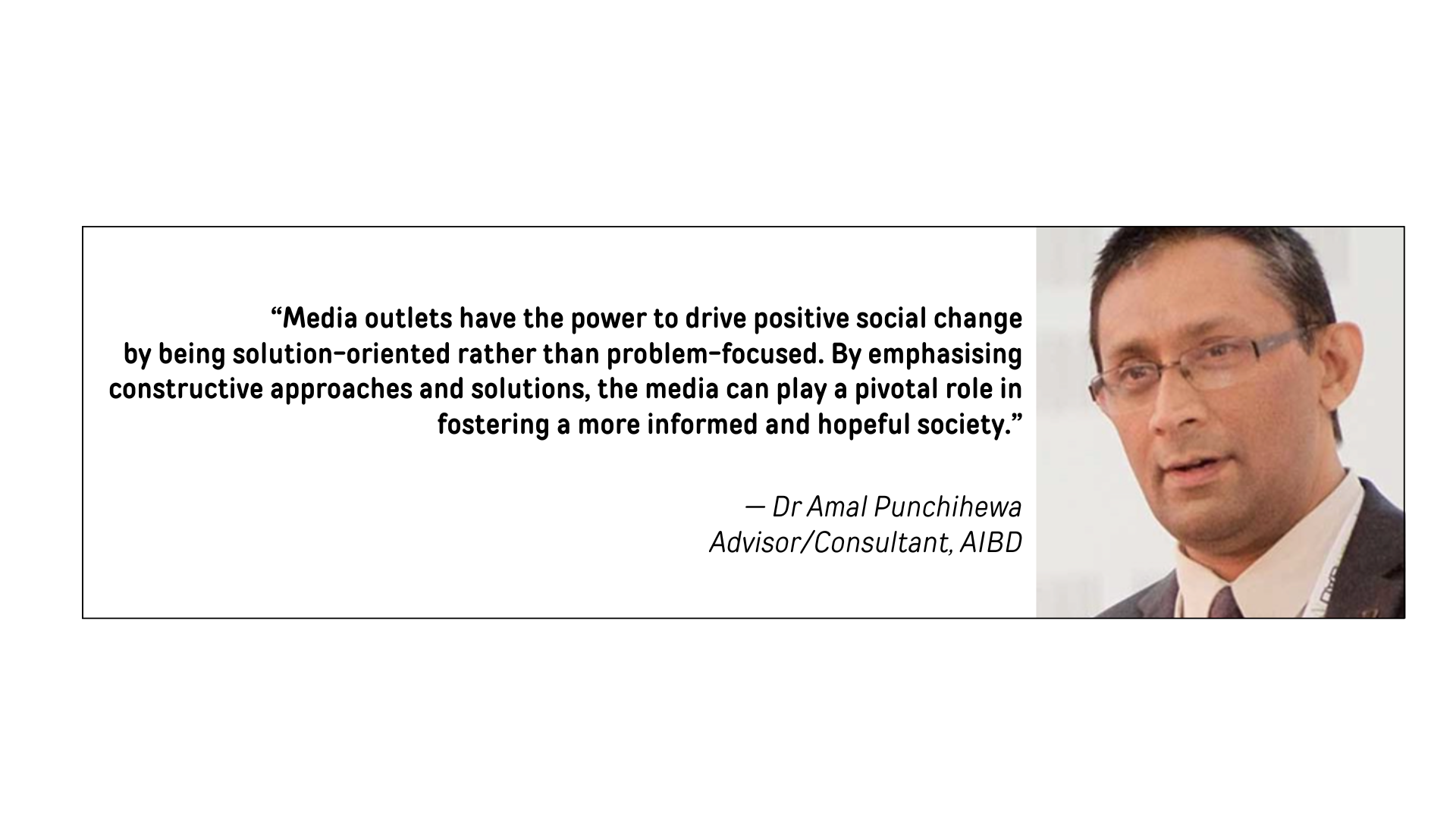
The theme of the AMS2024 was Media: New Odyssey, a timely reminder for the broadcast and media industry to champion social good and shape a new future. Among key messages, opening session speakers reminded that the current focus on negative news and content that fuels hatred and conflict needs to be re-evaluated. Media outlets have the power to drive positive social change by being solution-oriented rather than problem-focused. By emphasising constructive approaches and solutions, the media can play a pivotal role in fostering a more informed and hopeful society.
In her opening remarks, AIBD Secretariat Director/CEO, Philomena Gnanapragasam described the world as a “cyber-village” with the advent of the digital revolution, which has brought both positive and negative impacts on people’s livelihoods.
Rapid technological advancements bring digital disruptions in every sector. The broadcast and media sector is not immune to those changes and disruptions. Media and broadcast production, distribution and consumption have embraced cyberspace. However, the vulnerabilities in those environments bring threats from cyber-attacks and have supported the dissemination of inaccurate and untruthful content.
There were nine pre-summit workshops held before two summit days of AMS2024. They cover a wide range of areas including AI, 5G, news, sustainability, media literacy, disinformation and so on, and featured topics like Leveraging AI for Newsroom Automation, AI in Television Broadcast and Production, Inclusive and Resilient Broadcasting Development, Future-Proofing 4K Broadcasting with 5G Trends, Debunking Disinformation and Promoting Media Literacy, Promoting Media Accessibility for Vulnerable Groups, and Enhancing Sustainability through Digital Story Telling.
One of the most frequent technological discussions that took place during AMS2024 was on 5G in broadcasting and media.
The 5G and Ultra HD (UHD) workshop discussed emerging technologies in the domain of UHD and 5G, how they are changing the way broadcasters plan and execute productions, coverage of live sports events, future broadcast and media distribution methods and how emerging technologies such as 5G may facilitate live or other outside broadcast (OB) productions. The workshop also discussed current and emerging trends, the current priorities of broadcasters and the challenges they are facing in embracing these technologies as part of their digital transformation to provide enhanced user and audience experience.
Recently, the United Nations General Assembly (UNGA) has also adopted two key resolutions for artificial intelligence (AI), which has made rapid inroads into the digital media industry. One resolution focuses on enhancing international cooperation on the capacity building of AI and the other resolution focuses on seizing the opportunities of safe, secure and trustworthy AI systems for sustainable development. H.E Armida Salsiah Alisjahbana, Under-Secretary-General, United Nations and Executive Secretary (UN-ESCAP), mentioned in a video message that both resolutions recognise the potential benefits that AI can bring to sustainable development around the world, yet both also acknowledge the potential damage that it can cause if left unmanaged.
The digital tools that allow us to share knowledge with unprecedented speed and reach have also become conduits for misinformation and falsehoods. Having both positive and negative impacts presents a unique set of challenges that impact every aspect of our societies, from governance and public policy to personal relationships and community trust. On combating disinformation, Hon Neth Pheaktra, Cambodia’s Minister of Information (MOI), mentioned that Cambodia remains steadfast in its efforts to combat the pervasive challenges of fake news which is occurring at a high frequency in the Asia-Pacific region. Hon Neth said, “In this era of evolving technologies, including AI, we must collaborate closely to manage these developments and their impact on our nations and governments.”
It was also announced during AMS2024 that Malaysia will move in tandem with current global developments like Singapore and Indonesia to enforce a licensing framework targeting social media and internet messaging service providers with a minimum of eight million users.
YBrs Mano Verabathran, Deputy Secretary-General (T), Ministry of Communications Malaysia, said this is to ensure these platforms are safer for users to use online and guarantee that Malaysian internet service providers are held accountable for their operations.
He also added that media organisations should be active in policy discussions, contributing their insights to help shape regulations that protect public trust while allowing for innovation. They must also work with other industrial bodies to develop standards and regulations that govern the ethical use of AI and deep-fake technologies, including the advocacy for laws that hold creators of harmful deep-fakes accountable.
To keep track of these developments and to continue to provide a platform for key stakeholders in the Asia-Pacific to collaborate in shaping the future of the region’s broadcast and media industry, the Kingdom of Cambodia has pledged to host the 20th Asia Media Summit (AMS2025) in Siem Reap and it is already shaping up to be a not-to-be-missed event on the broadcast and media calendar.