
Cloud goes over-the-top - APB+ News

APB+ News

APB AWARDS - NOMINATE NOW!

[master-leader-web]
[master-leader-mob]

Cloud goes over-the-top

Add Your Heading Text Here

The
route to cloud-based broadcasting involves more than just working and storing
content. What are the key considerations that broadcasters need to think through
to unlock the future of multi-screen broadcasting?
Lara Tan uncovers more …

From
analogue to digital, on-premise to cloud, and single screen to multiple screens
… the media industry is witnessing a transformation accelerated by today’s
viewing habits in the connected world. Ascending to cloud broadcasting is not
an over-the-top (OTT) hype, as the technology is an imperative if broadcasters
are seeking ways to maximise productivity at minimum cost.

While media owners are charting their paths
to the cloud, one cannot expect them to do away with their existing production
and distribution systems. Kaltura, a video technology provider amalgamating
pay-TV and over-the-top (OTT), is offering broadcasters a path to ‘Cloud TV’.

Kaltura aims to transform legacy TV
distribution business to enable broadcasters to stay ahead of the competition.

The traditionally parallel technology
converges the middleware in pay-TV and conditional access system (CAS) in OTT
in a cloud-based video processing workflow, thus enabling multi-screen, big
screen, secure and personalised content – and, as it is software-defined IP
hybrid solution, it is scalable and flexible. Therefore, broadcasters can enter
a new era of direct-to-consumer delivery via Cloud TV and this can save
significant operational costs.

Hub’s Research has shown that each household
in the US subscribes to an average of 4.6 video services. As increasingly more
viewers are looking for content through an aggregated service, Cloud TV is
ideal for facilitating discovery and personalisation of content, thereby
reducing churn rates and increasing delivery capabilities to conduct content
upsell.

“The implementation of novel technologies
(such as AI and Cloud TV) to generate actionable insights for better
understanding and prediction of user behaviour is essential to increasing
engagement and monetisation,” according to a Kaltura press statement.

More importantly, Cloud TV offers
operational agility as it is fast and easy to launch and can adapt to market
dynamics swiftly, thus providing broadcasters the ability to respond to
up-to-date market movements.

In September this year, Kaltura supported
Vodafone TV’s expansion into new territories such as Greece, Romania and
Portugal. Kaltura offered a multi-country telecom-grade TV service that relies
on a single common cloud-based platform which allows Vodafone OpCos to launch
its market-leading Vodafone TV service within the countries mentioned.

“Vodafone TV is proving that by combining
the reliability, security and scalability of pay-TV with the agility, economics
and functionality of OTT, telcos can launch competitive Cloud TV services at
scale.

“We wanted to be first off the blocks with a
new genre of cloud-based TV service that could be easily and cost-effectively
replicated and launched in new Vodafone markets,” says Wolfgang Zeller, head of
Video Centre of Excellence at Vodafone.

“With Kaltura, we were able to launch a
next-generation Cloud TV solution that was fast to market, more cost-effective
and, most importantly, increased our subscribers’ NPS (net promoter score). We
are continuously impressed by how Kaltura’s technology, expertise and Cloud TV
track record accelerate our joint vision for the future of TV.”

The service is said to set a new standard in
the world of Cloud TV functionality, and Vodafone is advancing into one of the
most advanced multi-tenant Cloud TV services in the world.

Multi-tenancy refers to the architecture of
the cloud which allows the same application to be shared by multiple customers,
yet achieving security, reliability and performance for each individual tenant.
Contrary to popular beliefs, current enterprise security models are prone to
inside-attacks as they are peri­meter-based. Multi-tenancy improves the
security as there are added security over the sharing of assets.

Two years ago, a group of infamous online
hacker, The Dark Overload, stole 10 episodes of yet-to-release Season 5 of Orange
Is the New Black,
and demanded ransom to be paid to prevent the release of the episodes
online.

Although the Internet has revolutionised the
world, broadcasters ought to put in place tight security measures.

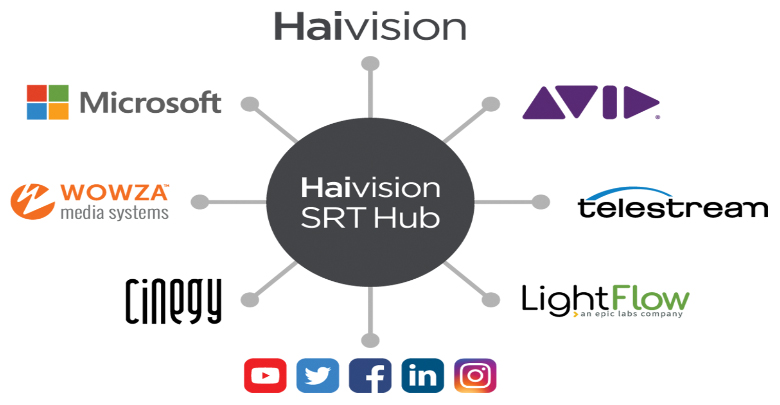
Understanding the threat, Haivision, a video
streaming solutions provider, is partnering other leading technology
manufacturers to promote and establish a global Secure Reliable Transport (SRT)
standard to deliver secure, low-latency video streams and files across the
public Internet and within the public cloud.

SRT supports
broadcasters with live and file-based routing workflow from the field to
production to ensure content security and fast delivery. Leveraging Microsoft
Azure’s global outreach, SRT can offer the shortest first-mile hop onto the
cloud.

Award-winning Brightcove Live solution has
also caught the eyes of broadcasters after it unveiled new features of
Brightcove Live earlier this year. The solution is a broadcast-grade,
cloud-based live-streaming solution with broad device reach and integrated
monetisation capabilities using server-side ad insertion (SSAI), thereby
enabling broadcasters to monetise live video and scale according to business
needs.

During the delivery of live streams over the
Internet, transport stream (TS) input interface allows broadcasters the flexibility
to send a broadcast-native MPEG2-TS stream to Brightcove Live without having to
convert to digital RTMP (real-time messaging protocol) format, simultaneously
eliminating the need for costly on-site encoders.

By accepting MPEG2-TS, Brightcove Live can
detect SCTE-35 ad markers, replacing the linear ads with digital ads across
devices using SSAI.

Charles Chu, chief product officer at
Brightcove, says: “Brightcove Live is backed by our best-of-breed support team,
and has already streamed some of the largest global annual sporting events and
conferences.
We have improved the solution continually based on
feedback from users, and look forward to helping them achieve their goals event
after event.”

And with constant stream of innovations and
enhancement upon enhancement of existing solutions, the path ahead is to
determine what, why and how broadcasters can leverage emerging technologies to
thrive in the world of instant gratification of news and entertainment.
Whichever way one chooses to go, the enabling technologies are out there … when
there’s a plan, there’s a way.

Join The Community

Join The Community

Cloud goes over-the-top

Add Your Heading Text Here

The
route to cloud-based broadcasting involves more than just working and storing
content. What are the key considerations that broadcasters need to think through
to unlock the future of multi-screen broadcasting?
Lara Tan uncovers more …

From
analogue to digital, on-premise to cloud, and single screen to multiple screens
… the media industry is witnessing a transformation accelerated by today’s
viewing habits in the connected world. Ascending to cloud broadcasting is not
an over-the-top (OTT) hype, as the technology is an imperative if broadcasters
are seeking ways to maximise productivity at minimum cost.

While media owners are charting their paths
to the cloud, one cannot expect them to do away with their existing production
and distribution systems. Kaltura, a video technology provider amalgamating
pay-TV and over-the-top (OTT), is offering broadcasters a path to ‘Cloud TV’.

Kaltura aims to transform legacy TV
distribution business to enable broadcasters to stay ahead of the competition.

The traditionally parallel technology
converges the middleware in pay-TV and conditional access system (CAS) in OTT
in a cloud-based video processing workflow, thus enabling multi-screen, big
screen, secure and personalised content – and, as it is software-defined IP
hybrid solution, it is scalable and flexible. Therefore, broadcasters can enter
a new era of direct-to-consumer delivery via Cloud TV and this can save
significant operational costs.

Hub’s Research has shown that each household
in the US subscribes to an average of 4.6 video services. As increasingly more
viewers are looking for content through an aggregated service, Cloud TV is
ideal for facilitating discovery and personalisation of content, thereby
reducing churn rates and increasing delivery capabilities to conduct content
upsell.

“The implementation of novel technologies
(such as AI and Cloud TV) to generate actionable insights for better
understanding and prediction of user behaviour is essential to increasing
engagement and monetisation,” according to a Kaltura press statement.

More importantly, Cloud TV offers
operational agility as it is fast and easy to launch and can adapt to market
dynamics swiftly, thus providing broadcasters the ability to respond to
up-to-date market movements.

In September this year, Kaltura supported
Vodafone TV’s expansion into new territories such as Greece, Romania and
Portugal. Kaltura offered a multi-country telecom-grade TV service that relies
on a single common cloud-based platform which allows Vodafone OpCos to launch
its market-leading Vodafone TV service within the countries mentioned.

“Vodafone TV is proving that by combining
the reliability, security and scalability of pay-TV with the agility, economics
and functionality of OTT, telcos can launch competitive Cloud TV services at
scale.

“We wanted to be first off the blocks with a
new genre of cloud-based TV service that could be easily and cost-effectively
replicated and launched in new Vodafone markets,” says Wolfgang Zeller, head of
Video Centre of Excellence at Vodafone.

“With Kaltura, we were able to launch a
next-generation Cloud TV solution that was fast to market, more cost-effective
and, most importantly, increased our subscribers’ NPS (net promoter score). We
are continuously impressed by how Kaltura’s technology, expertise and Cloud TV
track record accelerate our joint vision for the future of TV.”

The service is said to set a new standard in
the world of Cloud TV functionality, and Vodafone is advancing into one of the
most advanced multi-tenant Cloud TV services in the world.

Multi-tenancy refers to the architecture of
the cloud which allows the same application to be shared by multiple customers,
yet achieving security, reliability and performance for each individual tenant.
Contrary to popular beliefs, current enterprise security models are prone to
inside-attacks as they are peri­meter-based. Multi-tenancy improves the
security as there are added security over the sharing of assets.

Two years ago, a group of infamous online
hacker, The Dark Overload, stole 10 episodes of yet-to-release Season 5 of Orange
Is the New Black,
and demanded ransom to be paid to prevent the release of the episodes
online.

Although the Internet has revolutionised the
world, broadcasters ought to put in place tight security measures.

Understanding the threat, Haivision, a video
streaming solutions provider, is partnering other leading technology
manufacturers to promote and establish a global Secure Reliable Transport (SRT)
standard to deliver secure, low-latency video streams and files across the
public Internet and within the public cloud.

SRT supports
broadcasters with live and file-based routing workflow from the field to
production to ensure content security and fast delivery. Leveraging Microsoft
Azure’s global outreach, SRT can offer the shortest first-mile hop onto the
cloud.

Award-winning Brightcove Live solution has
also caught the eyes of broadcasters after it unveiled new features of
Brightcove Live earlier this year. The solution is a broadcast-grade,
cloud-based live-streaming solution with broad device reach and integrated
monetisation capabilities using server-side ad insertion (SSAI), thereby
enabling broadcasters to monetise live video and scale according to business
needs.

During the delivery of live streams over the
Internet, transport stream (TS) input interface allows broadcasters the flexibility
to send a broadcast-native MPEG2-TS stream to Brightcove Live without having to
convert to digital RTMP (real-time messaging protocol) format, simultaneously
eliminating the need for costly on-site encoders.

By accepting MPEG2-TS, Brightcove Live can
detect SCTE-35 ad markers, replacing the linear ads with digital ads across
devices using SSAI.

Charles Chu, chief product officer at
Brightcove, says: “Brightcove Live is backed by our best-of-breed support team,
and has already streamed some of the largest global annual sporting events and
conferences.
We have improved the solution continually based on
feedback from users, and look forward to helping them achieve their goals event
after event.”

And with constant stream of innovations and
enhancement upon enhancement of existing solutions, the path ahead is to
determine what, why and how broadcasters can leverage emerging technologies to
thrive in the world of instant gratification of news and entertainment.
Whichever way one chooses to go, the enabling technologies are out there … when
there’s a plan, there’s a way.

Join The Community

Stay Connected

Facebook

101K

Twitter

3.9K

Instagram

1.7K

LinkedIn

19.9K

YouTube

0.2K

Subscribe to the latest news now!


    Scroll to Top