
Microservices help make live production quicker and more efficient in the cloud - APB+ News

APB+ News

APB AWARDS - NOMINATE NOW!

[master-leader-web]
[master-leader-mob]

Microservices help make live production quicker and more efficient in the cloud

Add Your Heading Text Here

By Greg de Bressac, vice president of sales, APAC at Grass Valley.

The rapid
evolution of media industry and consumer expectation for stunning images and access
across all screens, means today’s broadcasters
must find more efficient ways to create a higher volume of first-class content.

Timescales to market are also compressing; from
conception to launch for new services is now weeks or a few months, compared to
the years it would have taken in the past. As consumer habits shift, services
today must also evolve to keep pace and need to be able to spin-down as fast as
they are spun up.

Virtualization and beyond

Today’s media organizations are now producing, ingesting and managing vast amounts of content to meet
the huge demand from consumers; traditional broadcast architectures can no
longer be relied on to handle this sharp uptick.

The move from CAPEX to OPEX and workflows virtualised
on commodity hardware are steps
in the right direction, delivering the flexibility to add and pay for
additional capability and capacity as needed.
A cloud-native, or microservices approach, is the next logical evolution, enabling
broadcasters to make the necessary step change.

Microservices add greater degrees of
inherent nimbleness to existing IT infrastructure, which is critical to shaping successful media businesses for the future. This approach also opens
up new ways to build, maintain and operate services and provides the capacity to scale these services – up or
down – in a very compressed time frame.

Taking live
production to the cloud

Live production – and particularly live
sports – is where the power of microservices has the potential to really come
into its own. Leveraging microservices, capabilities can be fired up just before
a game then be turned off after the final post-game analysis wraps up. In
short, you are only paying while the infrastructure is in use.

Grass
Valley has taken a cloud native approach, using a software as a service (SaaS) platform
for live sports which we call Agile Media Processing Platform (GV AMPP). Using
a SaaS approach enables broadcasters to easily transition to future-ready
public, data center or hybrid infrastructures while directly addressing many of
the issues that complicate common IP and cloud deployments, such as network
connectivity, timing and ultra-low latency.

The
microservices architecture is based on five core technologies — fabric, timing,
connectivity, identity, and streaming, allowing events to be produced by teams
in any location.

Our
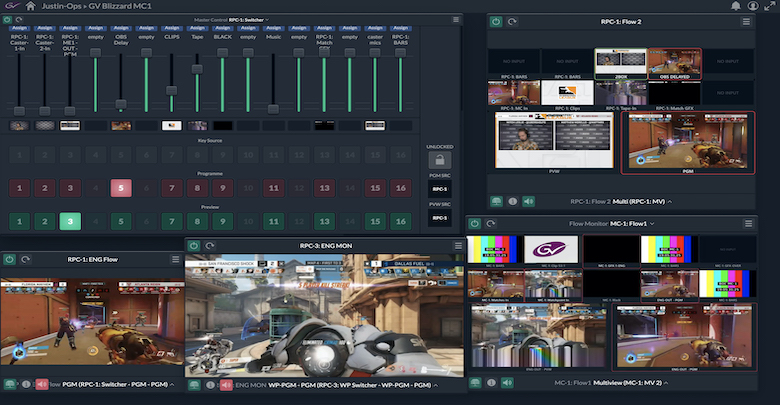
work with Activision Blizzard Esports is a prime example of how this technology
allows live content producers to benefit from a new level of agility and
flexibility. By leveraging AMPP, Blizzard was able to keep its Overwatch League
and Call of Duty League matches live on air during public lockdown. The
production crew was able to create customisable workflows in the cloud without
having physical infrastructure in place – such as switchers or audio consoles.

A
microservices architecture and SaaS approach shows how software and cloud-based production can open up new ways to
build and operate services.

Join The Community

Join The Community

Microservices help make live production quicker and more efficient in the cloud

Add Your Heading Text Here

By Greg de Bressac, vice president of sales, APAC at Grass Valley.

The rapid
evolution of media industry and consumer expectation for stunning images and access
across all screens, means today’s broadcasters
must find more efficient ways to create a higher volume of first-class content.

Timescales to market are also compressing; from
conception to launch for new services is now weeks or a few months, compared to
the years it would have taken in the past. As consumer habits shift, services
today must also evolve to keep pace and need to be able to spin-down as fast as
they are spun up.

Virtualization and beyond

Today’s media organizations are now producing, ingesting and managing vast amounts of content to meet
the huge demand from consumers; traditional broadcast architectures can no
longer be relied on to handle this sharp uptick.

The move from CAPEX to OPEX and workflows virtualised
on commodity hardware are steps
in the right direction, delivering the flexibility to add and pay for
additional capability and capacity as needed.
A cloud-native, or microservices approach, is the next logical evolution, enabling
broadcasters to make the necessary step change.

Microservices add greater degrees of
inherent nimbleness to existing IT infrastructure, which is critical to shaping successful media businesses for the future. This approach also opens
up new ways to build, maintain and operate services and provides the capacity to scale these services – up or
down – in a very compressed time frame.

Taking live
production to the cloud

Live production – and particularly live
sports – is where the power of microservices has the potential to really come
into its own. Leveraging microservices, capabilities can be fired up just before
a game then be turned off after the final post-game analysis wraps up. In
short, you are only paying while the infrastructure is in use.

Grass
Valley has taken a cloud native approach, using a software as a service (SaaS) platform
for live sports which we call Agile Media Processing Platform (GV AMPP). Using
a SaaS approach enables broadcasters to easily transition to future-ready
public, data center or hybrid infrastructures while directly addressing many of
the issues that complicate common IP and cloud deployments, such as network
connectivity, timing and ultra-low latency.

The
microservices architecture is based on five core technologies — fabric, timing,
connectivity, identity, and streaming, allowing events to be produced by teams
in any location.

Our
work with Activision Blizzard Esports is a prime example of how this technology
allows live content producers to benefit from a new level of agility and
flexibility. By leveraging AMPP, Blizzard was able to keep its Overwatch League
and Call of Duty League matches live on air during public lockdown. The
production crew was able to create customisable workflows in the cloud without
having physical infrastructure in place – such as switchers or audio consoles.

A
microservices architecture and SaaS approach shows how software and cloud-based production can open up new ways to
build and operate services.

Join The Community

Stay Connected

Facebook

101K

Twitter

3.9K

Instagram

1.7K

LinkedIn

19.9K

YouTube

0.2K

Subscribe to the latest news now!


    Scroll to Top