


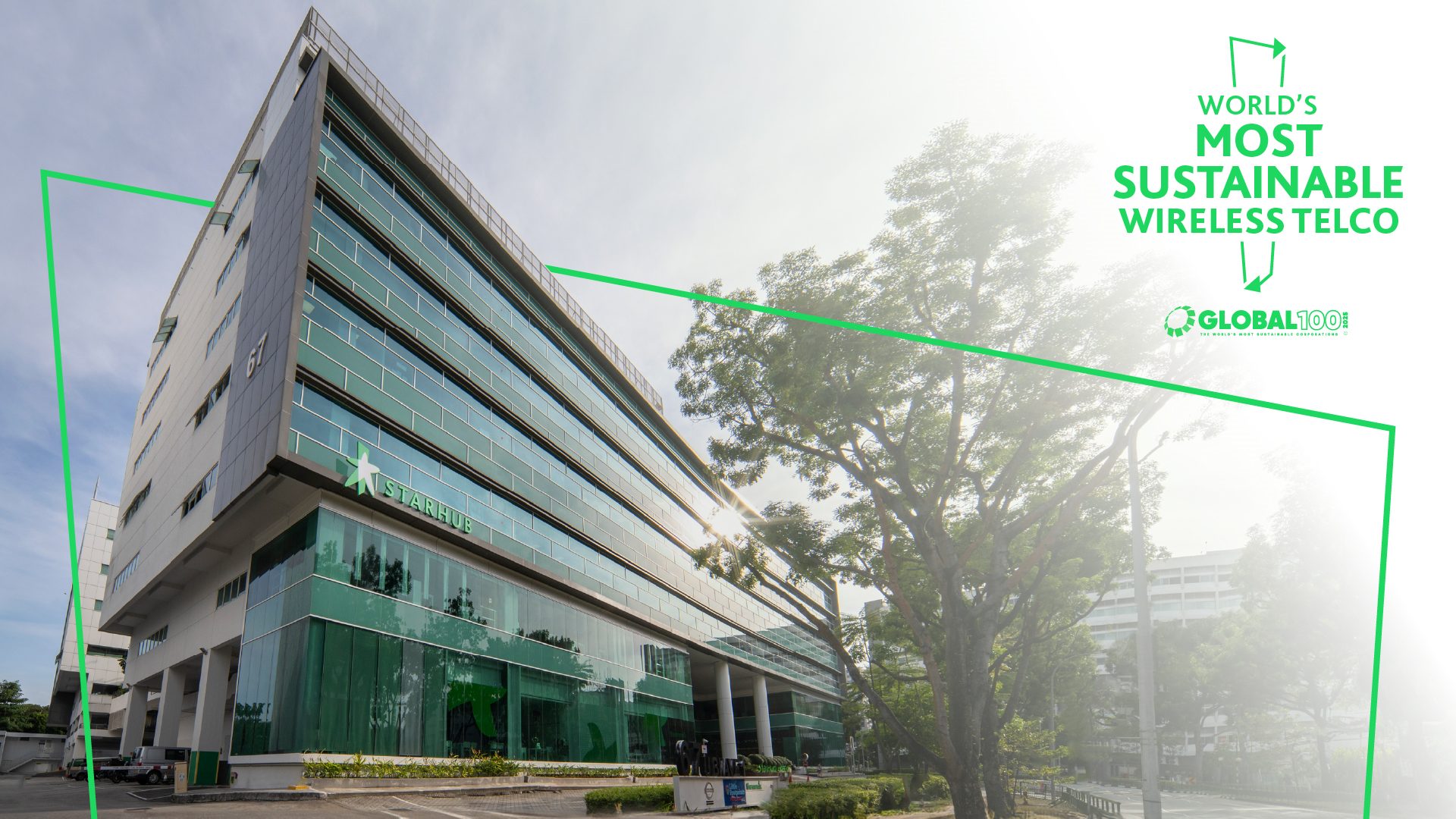
StarHub has been recognised as the World’s Most Sustainable Wireless Telecom Provider in the Corporate Knights Global 100 rankings at this year’s World Economic Forum.
Since 2005, Corporate Knights has quantitatively ranked the world’s 100 most sustainable companies based on a rigorous assessment across 25 key performance indicators of public companies with revenue over US$1 billion.
For the Corporate Knights Global 100 2025 rankings, over 8,359 companies were evaluated with 100 finalists. StarHub has earned a notable distinction in 2025, securing the 73rd spot among the world’s most sustainable companies, up from 80th in 2024.
Jaclyn Yeo, Head of Sustainability, StarHub, said, “StarHub has consistently been recognised by Corporate Knights for our sustainability efforts since 2022. This recognition is a testament to the dedication and hard work of the StarHub team in prioritising energy efficiency, reducing our carbon footprint, and driving innovation in green technologies.
“It reflects the commitment we have made to our customers, employees, and stakeholders to lead with sustainability and continue creating a positive impact on both our business and the environment.”
In September 2024, StarHub also published its second Climate Transition Plan, outlining the company’s commitment to investing in climate-resilient and energy efficient network infrastructure, renewable energy, green products and services amongst others, and reemphasising on StarHub’s goal to achieve net-zero across its value chain by 2050.
StarHub is committed to reducing its carbon footprint by prioritising energy efficiency across its data centres and network infrastructure, which together account for over 80% of the company’s Scope 1 and 2 emissions.
By focusing on reducing absolute energy consumption, StarHub aims to achieve improved operational performance and cost efficiency. In addition, the company is working towards a target of sourcing 30% of its energy from renewable sources by 2030 to further reduce its carbon intensity.