
Turbulence in the air: Will 5G interference with aircraft altimeter seriously affect its nation-wide rollout? - APB+ News

APB+ News

APB AWARDS - NOMINATE NOW!

[master-leader-web]
[master-leader-mob]

Turbulence in the air: Will 5G interference with aircraft altimeter seriously affect its nation-wide rollout?

Add Your Heading Text Here

By Shirish Nadkarni

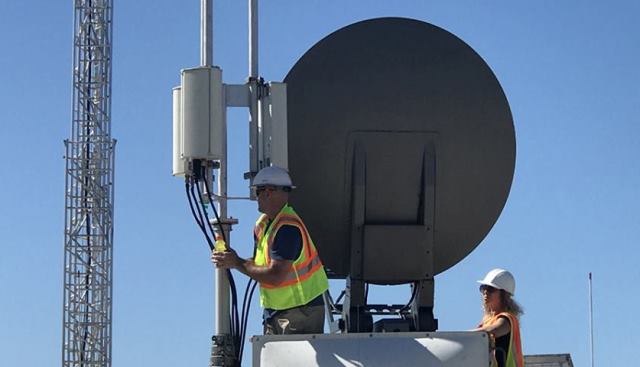
While the entire world is agog with the mind-boggling benefits of 5G transmission for the telecommunications and broadcasting industries, the applications and monetisation of 5G calculations are encountering some headwinds and air turbulence in the United States as news spread that 5G signals could interfere with the radio altimeter of aircraft — and thereby preventing the engine from transitioning to landing mode as it approaches the runway.

Although 5G is currently live in over 40 countries worldwide with no serious impact on aviation, there was a disturbing issue of an airline-specific bulletin by the giant aircraft manufacturer Boeing. 

The Seattle-based Boeing has issued airline-specific bulletins, alerting pilots to a long list of possible problems the cockpit could be besieged with at lower altitudes if 5G signals from a transmission tower near a US airport interfered with those of the aircraft’s altimeter, an instrument that measures accurately the plane’s height over ground. 

It would appear that the 5G environment in the US – where a national rollout of the technology is imminent – differs significantly from that of other countries. For instance, planned buffer zones for US airports only protect the last 20 seconds of flight, compared to a much greater range (96 seconds) in France. Also, 5G power levels are far lower in France – 631 watts, against the 1,585 watts used in the US.

Moreover, the band spectrum used in commercial aviation is hair-raisingly close to the 5G spectrum employed in the US. Aviation altimeter spectrum is in the frequency between 4.2 GHz to 4.4 GHz, while the 5G C-band spectrum fundamental emissions lie between the 3.7 GHz and 3.98 GHz bands. But certain ‘spurious emissions’ could be found in the 4.2 - 4.4 GHz frequency band, which are too close for the comfort of pilots.

Spurious emissions from a 5G tower are potentially dangerous

“In a worst-case scenario, the fundamental emissions or spurious emissions from a 5G tower could cause interference with radio waves, affecting the performance of the radio altimeter,” says a paper published by Radio Technical Commission for Aeronautics, a US-based non-profit organisation, way back in October 2020. The paper however states that resilient altimeters could withstand interference.

It is necessary to understand the correlation between the different bands of 5G and the radio waves that help a pilot guide his aircraft down in conditions of low visibility, like fog, mist or smog.

Low-band 5G operates between 600 MHz and 850 MHz, similar to what 4G networks currently use, and is only moderately faster than 4G. Not all cities and regional operators are deploying low-band 5G towers; some are opting to start with mid-band towers. 

Mid-band 5G (also known as C-band) operates in the 2.5 GHz to 3.7 GHz range, and delivers speeds between 100 Mbps and 900 Mbps. While offering less range per cell tower, this type of 5G is going to be the most common implementation of 5G networks for many years to come. It's a reasonable compromise between network speed and range in both medium-density urban areas and less dense rural regions.

High-band 5G is the band that is most commonly associated with 5G. Operating at 25 GHz to 39 GHz, this is known as the "millimeter wave" spectrum and delivers gigabit speeds, currently tested as high as 1.8 Gbps. The trade-off is that millimeter wave transmitters have limited range and require the deployment of many small transmitters, so it is only viable in urban areas where transmitters can be near closely spaced homes and buildings.

The powerful FAA steps in to sort out the issue

The Federal Aviation Administration (FAA) of the US recently published a statement to allow an estimated 78% of the in-service US commercial fleet to perform low-visibility landings at airports where wireless companies deployed 5G C-band. This gave several US and international airlines the ability to restore some flights that were cancelled due to AT&T and Verizon flipping the switch on their new networks on January 19 this year.

FAA officials are anticipating that some altimeters will be too susceptible to potential 5G interference, and that the aircraft they are featured on will be prohibited from performing low-visibility landings where 5G C-Band is deployed because the altimeter could provide inaccurate information.

Basically, the problem centres around the quantum of power employed by the two sides when the 5G transmission is switched on from 5G towers that are close to airports. If the likes of AT&T and Verizon use high power, there is the danger of interference with the altimeters of aircraft. However, if they employ lower power, it creates unhappy TV customers.

Both AT&T and Verizon have agreed to temporarily delay turning on a limited number of their 5G C-band towers that they are deploying near certain airports. Since the beginning of December 2021, the two sides of the 5G C-band deployment have agreed to several delays and risk mitigation measures for the 5G towers being deployed to ensure aircraft radar and radio altimeter signals do not experience interference from the new wireless network services that are being deployed.

As aviation experts describe it, the 5G system used by AT&T and Verizon works in similar frequencies to the ones used by altimeters. But telecommunications experts say that there is little or no risk to altimeters from 5G, and that the aviation business has had years to prepare for what little risk there exists between the two spectrums that operate in proximity with each other. 

One possible solution would be to restrict the upper end of the mid-band 5G spectrum in use on the ground to 3.5 GHz, if that is commercially acceptable, to keep it comfortably away from the 4.2 GHz to 4.4 GHz levels used in aviation. 

Commercial rollout of 5G in India imminent

In India, where a countrywide rollout of the 5G spectrum is tentatively scheduled for May 2022, Telecom Minister Ashwini Vaishnav earlier this month said that the Telecom Regulatory Authority of India (Trai) has informed that it will submit its recommendations for the 5G auction by March, while the Department of Telecommunications (DoT) simultaneously firms up other processes to hold the auction at the earliest possible date.

Air India, the only Indian carrier that flies to the US, operates the India-US route with Boeing wide-body aircraft. Other aircraft manufacturers too have issued similar documents, but the 5G effects vary. For instance, a document from the other commercial airliner manufacturing giant Airbus states: “On A350 and A380 aircraft, 5G interference on radio altimeters is negligible, hence the absence of cockpit effects.”

How do pilots read this?

A senior B-777 commander said, “Boeing has alerted pilots to the worst-case scenario. It has listed everything that could possibly go wrong in the cockpit if 5G interference ever happens. The message pilots get is, don’t attempt low-visibility landings, the radio altimeter isn’t reliable. Also, when landing in good weather, stay extra alert after descending to 2,500ft and be ready for a manual landing.”

Workload in cockpits of US-bound aircraft has increased

What pilots concur on is that, with 5G rollout in the US, the workload in the cockpit of US-bound aircraft has gone up. For instance, at height below 2,500ft, pilots will now need to be very alert for possible 5G interference. 

Boeing instructs pilots to monitor and cross-check between two different altimeter readings. Above 2,500ft, a barometric servo altimeter provides altitude information by reading atmospheric pressure differences. It is not affected by 5G waves. But below 2,500ft, aircraft systems and pilots rely on the more accurate radio altimeter readings. But if 5G wave interference happens, the radio altimeter could fail or give erroneous readings, the bulletin cautions.

Air safety expert Capt. Amit Singh says, “During training, pilots are drilled to trust the aircraft instruments to prevent spatial disorientation during low-visibility operations. With 5G, these instruments are under suspicion. Moreover, no specific set of instructions are given in the bulletins. 

“From a human factor/performance perspective, it is a difficult task, which will add workload and stress in the cockpits.”

Most stakeholders believe that the headwinds currently faced by 5G in the US aviation sector will blow over soon —  and that the future of the 5G technology remains bright.

Question:  Has the statement that “fundamental emissions or spurious emissions from a 5G tower could cause interference with radio waves, affecting the performance of the radio altimeter,” been authenticated and what can be done to resolve the problem?

Please direct your views to maven@editecintl.com.

Join The Community

Join The Community

Turbulence in the air: Will 5G interference with aircraft altimeter seriously affect its nation-wide rollout?

Add Your Heading Text Here

By Shirish Nadkarni

While the entire world is agog with the mind-boggling benefits of 5G transmission for the telecommunications and broadcasting industries, the applications and monetisation of 5G calculations are encountering some headwinds and air turbulence in the United States as news spread that 5G signals could interfere with the radio altimeter of aircraft — and thereby preventing the engine from transitioning to landing mode as it approaches the runway.

Although 5G is currently live in over 40 countries worldwide with no serious impact on aviation, there was a disturbing issue of an airline-specific bulletin by the giant aircraft manufacturer Boeing. 

The Seattle-based Boeing has issued airline-specific bulletins, alerting pilots to a long list of possible problems the cockpit could be besieged with at lower altitudes if 5G signals from a transmission tower near a US airport interfered with those of the aircraft’s altimeter, an instrument that measures accurately the plane’s height over ground. 

It would appear that the 5G environment in the US – where a national rollout of the technology is imminent – differs significantly from that of other countries. For instance, planned buffer zones for US airports only protect the last 20 seconds of flight, compared to a much greater range (96 seconds) in France. Also, 5G power levels are far lower in France – 631 watts, against the 1,585 watts used in the US.

Moreover, the band spectrum used in commercial aviation is hair-raisingly close to the 5G spectrum employed in the US. Aviation altimeter spectrum is in the frequency between 4.2 GHz to 4.4 GHz, while the 5G C-band spectrum fundamental emissions lie between the 3.7 GHz and 3.98 GHz bands. But certain ‘spurious emissions’ could be found in the 4.2 - 4.4 GHz frequency band, which are too close for the comfort of pilots.

Spurious emissions from a 5G tower are potentially dangerous

“In a worst-case scenario, the fundamental emissions or spurious emissions from a 5G tower could cause interference with radio waves, affecting the performance of the radio altimeter,” says a paper published by Radio Technical Commission for Aeronautics, a US-based non-profit organisation, way back in October 2020. The paper however states that resilient altimeters could withstand interference.

It is necessary to understand the correlation between the different bands of 5G and the radio waves that help a pilot guide his aircraft down in conditions of low visibility, like fog, mist or smog.

Low-band 5G operates between 600 MHz and 850 MHz, similar to what 4G networks currently use, and is only moderately faster than 4G. Not all cities and regional operators are deploying low-band 5G towers; some are opting to start with mid-band towers. 

Mid-band 5G (also known as C-band) operates in the 2.5 GHz to 3.7 GHz range, and delivers speeds between 100 Mbps and 900 Mbps. While offering less range per cell tower, this type of 5G is going to be the most common implementation of 5G networks for many years to come. It's a reasonable compromise between network speed and range in both medium-density urban areas and less dense rural regions.

High-band 5G is the band that is most commonly associated with 5G. Operating at 25 GHz to 39 GHz, this is known as the "millimeter wave" spectrum and delivers gigabit speeds, currently tested as high as 1.8 Gbps. The trade-off is that millimeter wave transmitters have limited range and require the deployment of many small transmitters, so it is only viable in urban areas where transmitters can be near closely spaced homes and buildings.

The powerful FAA steps in to sort out the issue

The Federal Aviation Administration (FAA) of the US recently published a statement to allow an estimated 78% of the in-service US commercial fleet to perform low-visibility landings at airports where wireless companies deployed 5G C-band. This gave several US and international airlines the ability to restore some flights that were cancelled due to AT&T and Verizon flipping the switch on their new networks on January 19 this year.

FAA officials are anticipating that some altimeters will be too susceptible to potential 5G interference, and that the aircraft they are featured on will be prohibited from performing low-visibility landings where 5G C-Band is deployed because the altimeter could provide inaccurate information.

Basically, the problem centres around the quantum of power employed by the two sides when the 5G transmission is switched on from 5G towers that are close to airports. If the likes of AT&T and Verizon use high power, there is the danger of interference with the altimeters of aircraft. However, if they employ lower power, it creates unhappy TV customers.

Both AT&T and Verizon have agreed to temporarily delay turning on a limited number of their 5G C-band towers that they are deploying near certain airports. Since the beginning of December 2021, the two sides of the 5G C-band deployment have agreed to several delays and risk mitigation measures for the 5G towers being deployed to ensure aircraft radar and radio altimeter signals do not experience interference from the new wireless network services that are being deployed.

As aviation experts describe it, the 5G system used by AT&T and Verizon works in similar frequencies to the ones used by altimeters. But telecommunications experts say that there is little or no risk to altimeters from 5G, and that the aviation business has had years to prepare for what little risk there exists between the two spectrums that operate in proximity with each other. 

One possible solution would be to restrict the upper end of the mid-band 5G spectrum in use on the ground to 3.5 GHz, if that is commercially acceptable, to keep it comfortably away from the 4.2 GHz to 4.4 GHz levels used in aviation. 

Commercial rollout of 5G in India imminent

In India, where a countrywide rollout of the 5G spectrum is tentatively scheduled for May 2022, Telecom Minister Ashwini Vaishnav earlier this month said that the Telecom Regulatory Authority of India (Trai) has informed that it will submit its recommendations for the 5G auction by March, while the Department of Telecommunications (DoT) simultaneously firms up other processes to hold the auction at the earliest possible date.

Air India, the only Indian carrier that flies to the US, operates the India-US route with Boeing wide-body aircraft. Other aircraft manufacturers too have issued similar documents, but the 5G effects vary. For instance, a document from the other commercial airliner manufacturing giant Airbus states: “On A350 and A380 aircraft, 5G interference on radio altimeters is negligible, hence the absence of cockpit effects.”

How do pilots read this?

A senior B-777 commander said, “Boeing has alerted pilots to the worst-case scenario. It has listed everything that could possibly go wrong in the cockpit if 5G interference ever happens. The message pilots get is, don’t attempt low-visibility landings, the radio altimeter isn’t reliable. Also, when landing in good weather, stay extra alert after descending to 2,500ft and be ready for a manual landing.”

Workload in cockpits of US-bound aircraft has increased

What pilots concur on is that, with 5G rollout in the US, the workload in the cockpit of US-bound aircraft has gone up. For instance, at height below 2,500ft, pilots will now need to be very alert for possible 5G interference. 

Boeing instructs pilots to monitor and cross-check between two different altimeter readings. Above 2,500ft, a barometric servo altimeter provides altitude information by reading atmospheric pressure differences. It is not affected by 5G waves. But below 2,500ft, aircraft systems and pilots rely on the more accurate radio altimeter readings. But if 5G wave interference happens, the radio altimeter could fail or give erroneous readings, the bulletin cautions.

Air safety expert Capt. Amit Singh says, “During training, pilots are drilled to trust the aircraft instruments to prevent spatial disorientation during low-visibility operations. With 5G, these instruments are under suspicion. Moreover, no specific set of instructions are given in the bulletins. 

“From a human factor/performance perspective, it is a difficult task, which will add workload and stress in the cockpits.”

Most stakeholders believe that the headwinds currently faced by 5G in the US aviation sector will blow over soon —  and that the future of the 5G technology remains bright.

Question:  Has the statement that “fundamental emissions or spurious emissions from a 5G tower could cause interference with radio waves, affecting the performance of the radio altimeter,” been authenticated and what can be done to resolve the problem?

Please direct your views to maven@editecintl.com.
Join The Community

Stay Connected

Facebook

101K

Twitter

3.9K

Instagram

1.7K

LinkedIn

19.9K

YouTube

0.2K

Subscribe to the latest news now!


    Scroll to Top