
Woke: Beware of selective news reporting and history written by victors - APB+ News

APB+ News

APB AWARDS - NOMINATE NOW!

[master-leader-web]
[master-leader-mob]

Woke: Beware of selective news reporting and history written by victors

Add Your Heading Text Here

By Shirish Nadkarni

In the world of media reportage, stereotypes abound. China is often mentioned in conjunction with Tiananmen Square; any talk of Russia has the accompanying taint of state-backed assassinations and banishment to the Siberian wasteland; several African and South American nations are invariably referred to as banana republics governed by corrupt, incompetent leaders.

On the other hand, Canada has a global reputation for being friendly and polite, and is not known for “cultural genocide”, as the Truth and Reconciliation Commission of Canada described it in 2015. In late-June this year, First Nations communities in Canada found over 1,000 unmarked graves in residential schools for native Indian children, which were run by the Roman Catholic Church from 1899 to 1997.

It has been documented that there were 130 such schools, with estimates that over 6,000 children died due to poor sanitation, little protection from the cold, or abuse from school staff.  This led to activists burning Catholic churches and taking down statues of Queen Elizabeth II and Queen Victoria. 

These tragic events are largely hidden in Canada’s history, and certainly from international perceptions of the country. Similar practices prevailed in Australia in the early years of the last century, but have not ended up besmirching the reputation of that country, or being part of a derogatory stereotype.

“Yet, is America defined by “pioneers” destroying First Nations culture and committing genocide?” asks Chandran Nair, founder and CEO of the Global Institute for Tomorrow. “The answer is no. Is Australia defined by settlers waging war on the First Nations people who until 1967 were not even considered citizens in their own country? No.

“Is tiny Belgium defined by its horrific colonial treatment of the population in Congo? No.

“The list is long.”

Here, according to the Global Institute for Tomorrow, a pattern begins to emerge on how Western and non-Western countries are portrayed and perceived in lay understanding of historical events. Common historical narratives of Western countries cover up or dilute colonial atrocities, war crimes and genocides. This includes even recent ones, such as the illegal invasion of Iraq. Sometimes these events are espoused as “building civilisation or bringing freedom”.

Nair is scathing in his criticism of the reportage of events and history by a section of the Western media. It is a selective retelling of history that enables the West to maintain its global dominance through the indoctrination of Westerners and non-Westerners alike – or, as the brilliant French-West Indian political philosopher Frantz Fanon called it, “Colonisation of the mind.”

In relating how curated historical viewpoints are used by the West to colonise Asian minds and construct opposing identities in the minds of Westerners and non-Westerners, to the benefit of the former, Nair asks why Western media “remembers Mao’s famine, but forgets (Winston) Churchill’s racist foreign policy that resulted in the starvation of three million Bengalis”?

Today, the world is woke to Western posturing, to white privilege.

For most Westerners, India remains a backward third-world nation. They are not willing to recognise or admit that vast numbers of doctors, engineers and computer whiz kids in the Western world have completed their education in Indian universities and then migrated to the West in search of better prospects because of the stifling bureaucratic environment in their home country, and the almost endemic corruption that had become a way of life in the government for 70 long years after Independence from the British in 1947. 

Yet, they refuse to recognise that a “reverse migration” of expatriate Indians, from the West back to India, has been happening for the past six or seven years.

There remains a concerted effort among the ranks of the Western media – major media houses like The New York Times, Washington Post and the BBC, to name just three – to continue to portray India in a poor light with the active assistance of a bunch of Indian “presstitutes” who have been doled out massive freebies and inducements by the various Indian Congress regimes that were in power, to gloss over the good and exacerbate anything negative they could perceive or even twist to denigrate India.

Why, no less a news agency than CNN declared in December 2020 that Indian Prime Minister Narendra Modi’s projection of completing 60 crore (600 million) COVID vaccinations by end-August 2021 was “incredibly ambitious for a developing country with poor rural infrastructure and an inadequate public health system”.

Modi’s reply that India has carried out 640 million successful vaccinations by end-August, including a one-day record of 12.8 million doses on August 31, is a resounding slap in the face of the biased, patronising Western media organisation.

It is becoming increasingly obvious that the Congress governments since 1947, presided over by a single dynasty, the Nehru-Gandhi parivar (family), have been desperately seeking to hold on to the Muslim vote by pandering to what they have been referring to as “the minority community” – all in the name of secularism. 

Even though Modi has continued to tread the path of secularism, and has repeatedly assured all communities that there is room for all creeds and religions in India, the pseudo-intellectuals have continued to harp on the fact that he has been leaning increasingly on the Hindutva theme. There have been efforts by the ruling BJP to show how safe and secure Muslims are in India, whereas there is hardly any leeway given to Hindus living in the 57 Islamic nations across the globe.

With the first tenet of good journalism being to present both sides of the picture, there is now a growing demand to rewrite the history that is being fed to school children through existing history books that seek unadulterated glorification of the likes of Mohandas (Mahatma) Gandhi, and the country’s first Prime Minister, Jawaharlal Nehru. The books are also unduly sympathetic towards the reputations of the Mughal conquerors of yore, like Babur, Humayun, Akbar, Shahjahan, Aurangzeb and Tipu Sultan.

Modern-day historians claim that they are not against extolling the plus points of all these figures, but would like there to be balance in the portrayals by revealing the flip side of the coin. For example, children should be made aware that Mumtaz was the fourth of seven wives of Shah Jahan, that her husband had been killed by the Emperor so that he could marry the widow, and that the Taj Mahal, where she is buried, is hardly a symbol of eternal love!

Children should also know the reasons why Nathuram Godse, who shot Gandhi to death on 30 January 1948, and made no attempt to flee the spot, took that path – rather than simply vilifying the murderer of the much-revered Father of the Nation. 

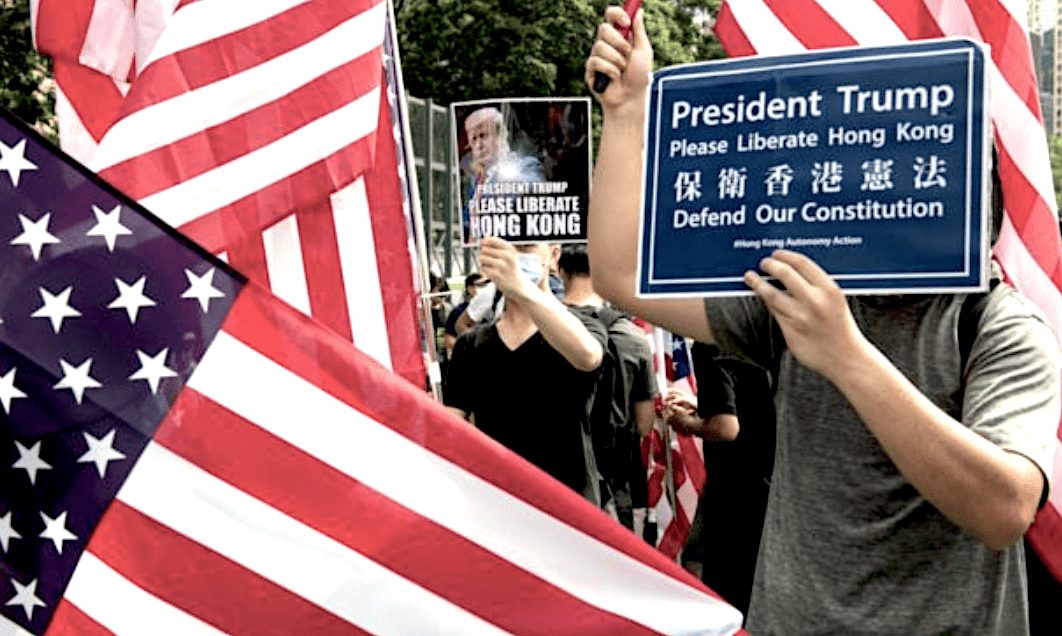
What is happening in India is a direct reflection on what is taking place in several of the former British colonies, especially in Hong Kong. Some of the elites of the former colony appear to be more interested in emulating British and Western culture than their own, or that of any others. The movie ‘Crazy Rich Asians’ is an example of this fetish.

“Imperialism, colonialism, and racism are painted as things of the past, as if ended by the decolonisation and civil rights movements of the 20th century,” says Nair. “This selective teaching promotes the myth of the ‘benevolent West’ – that the West has acted as a benign force towards other cultures and that it continues to have a positive influence on the world through its economic models, governance systems, cultures, and more.

“Essentially, it is very effective propaganda. 

“It is this selective retelling of history that enables the West to cling to an identity built on superiority and that has non-Westerners believing it. It is why some young Hongkongers have come to believe they are not Chinese.”

Nair concludes: “It is time for the West to stop using historical legitimacy to claim ownership of leading the world into the future by its own reckoning. And it is also time for Westerners and non-Westerners alike to produce alternative and more honest narratives, to unmask this privilege and help create a fairer world.”

Question: Woke is the past tense of wake … but in today’s connected world WOKE has taken a new meaning, people are waking up to the injustices in society caused by racism and prejudices, fuelled by many false narratives and half-truths that are being broadcast as news across multiple channels day after day? What can we in the media do to redress the colonisation of the mind?

To share your thoughts, please send them to shirish.nadkarni@editecintl.com or maven@editecintl.com.

Join The Community

Join The Community

Woke: Beware of selective news reporting and history written by victors

Add Your Heading Text Here

By Shirish Nadkarni

In the world of media reportage, stereotypes abound. China is often mentioned in conjunction with Tiananmen Square; any talk of Russia has the accompanying taint of state-backed assassinations and banishment to the Siberian wasteland; several African and South American nations are invariably referred to as banana republics governed by corrupt, incompetent leaders.

On the other hand, Canada has a global reputation for being friendly and polite, and is not known for “cultural genocide”, as the Truth and Reconciliation Commission of Canada described it in 2015. In late-June this year, First Nations communities in Canada found over 1,000 unmarked graves in residential schools for native Indian children, which were run by the Roman Catholic Church from 1899 to 1997.

It has been documented that there were 130 such schools, with estimates that over 6,000 children died due to poor sanitation, little protection from the cold, or abuse from school staff.  This led to activists burning Catholic churches and taking down statues of Queen Elizabeth II and Queen Victoria. 

These tragic events are largely hidden in Canada’s history, and certainly from international perceptions of the country. Similar practices prevailed in Australia in the early years of the last century, but have not ended up besmirching the reputation of that country, or being part of a derogatory stereotype.

“Yet, is America defined by “pioneers” destroying First Nations culture and committing genocide?” asks Chandran Nair, founder and CEO of the Global Institute for Tomorrow. “The answer is no. Is Australia defined by settlers waging war on the First Nations people who until 1967 were not even considered citizens in their own country? No.

“Is tiny Belgium defined by its horrific colonial treatment of the population in Congo? No.

“The list is long.”

Here, according to the Global Institute for Tomorrow, a pattern begins to emerge on how Western and non-Western countries are portrayed and perceived in lay understanding of historical events. Common historical narratives of Western countries cover up or dilute colonial atrocities, war crimes and genocides. This includes even recent ones, such as the illegal invasion of Iraq. Sometimes these events are espoused as “building civilisation or bringing freedom”.

Nair is scathing in his criticism of the reportage of events and history by a section of the Western media. It is a selective retelling of history that enables the West to maintain its global dominance through the indoctrination of Westerners and non-Westerners alike – or, as the brilliant French-West Indian political philosopher Frantz Fanon called it, “Colonisation of the mind.”

In relating how curated historical viewpoints are used by the West to colonise Asian minds and construct opposing identities in the minds of Westerners and non-Westerners, to the benefit of the former, Nair asks why Western media “remembers Mao’s famine, but forgets (Winston) Churchill’s racist foreign policy that resulted in the starvation of three million Bengalis”?

Today, the world is woke to Western posturing, to white privilege.

For most Westerners, India remains a backward third-world nation. They are not willing to recognise or admit that vast numbers of doctors, engineers and computer whiz kids in the Western world have completed their education in Indian universities and then migrated to the West in search of better prospects because of the stifling bureaucratic environment in their home country, and the almost endemic corruption that had become a way of life in the government for 70 long years after Independence from the British in 1947. 

Yet, they refuse to recognise that a “reverse migration” of expatriate Indians, from the West back to India, has been happening for the past six or seven years.

There remains a concerted effort among the ranks of the Western media – major media houses like The New York Times, Washington Post and the BBC, to name just three – to continue to portray India in a poor light with the active assistance of a bunch of Indian “presstitutes” who have been doled out massive freebies and inducements by the various Indian Congress regimes that were in power, to gloss over the good and exacerbate anything negative they could perceive or even twist to denigrate India.

Why, no less a news agency than CNN declared in December 2020 that Indian Prime Minister Narendra Modi’s projection of completing 60 crore (600 million) COVID vaccinations by end-August 2021 was “incredibly ambitious for a developing country with poor rural infrastructure and an inadequate public health system”.

Modi’s reply that India has carried out 640 million successful vaccinations by end-August, including a one-day record of 12.8 million doses on August 31, is a resounding slap in the face of the biased, patronising Western media organisation.

It is becoming increasingly obvious that the Congress governments since 1947, presided over by a single dynasty, the Nehru-Gandhi parivar (family), have been desperately seeking to hold on to the Muslim vote by pandering to what they have been referring to as “the minority community” – all in the name of secularism. 

Even though Modi has continued to tread the path of secularism, and has repeatedly assured all communities that there is room for all creeds and religions in India, the pseudo-intellectuals have continued to harp on the fact that he has been leaning increasingly on the Hindutva theme. There have been efforts by the ruling BJP to show how safe and secure Muslims are in India, whereas there is hardly any leeway given to Hindus living in the 57 Islamic nations across the globe.

With the first tenet of good journalism being to present both sides of the picture, there is now a growing demand to rewrite the history that is being fed to school children through existing history books that seek unadulterated glorification of the likes of Mohandas (Mahatma) Gandhi, and the country’s first Prime Minister, Jawaharlal Nehru. The books are also unduly sympathetic towards the reputations of the Mughal conquerors of yore, like Babur, Humayun, Akbar, Shahjahan, Aurangzeb and Tipu Sultan.

Modern-day historians claim that they are not against extolling the plus points of all these figures, but would like there to be balance in the portrayals by revealing the flip side of the coin. For example, children should be made aware that Mumtaz was the fourth of seven wives of Shah Jahan, that her husband had been killed by the Emperor so that he could marry the widow, and that the Taj Mahal, where she is buried, is hardly a symbol of eternal love!

Children should also know the reasons why Nathuram Godse, who shot Gandhi to death on 30 January 1948, and made no attempt to flee the spot, took that path – rather than simply vilifying the murderer of the much-revered Father of the Nation. 

What is happening in India is a direct reflection on what is taking place in several of the former British colonies, especially in Hong Kong. Some of the elites of the former colony appear to be more interested in emulating British and Western culture than their own, or that of any others. The movie ‘Crazy Rich Asians’ is an example of this fetish.

“Imperialism, colonialism, and racism are painted as things of the past, as if ended by the decolonisation and civil rights movements of the 20th century,” says Nair. “This selective teaching promotes the myth of the ‘benevolent West’ – that the West has acted as a benign force towards other cultures and that it continues to have a positive influence on the world through its economic models, governance systems, cultures, and more.

“Essentially, it is very effective propaganda. 

“It is this selective retelling of history that enables the West to cling to an identity built on superiority and that has non-Westerners believing it. It is why some young Hongkongers have come to believe they are not Chinese.”

Nair concludes: “It is time for the West to stop using historical legitimacy to claim ownership of leading the world into the future by its own reckoning. And it is also time for Westerners and non-Westerners alike to produce alternative and more honest narratives, to unmask this privilege and help create a fairer world.”

Question: Woke is the past tense of wake … but in today’s connected world WOKE has taken a new meaning, people are waking up to the injustices in society caused by racism and prejudices, fuelled by many false narratives and half-truths that are being broadcast as news across multiple channels day after day? What can we in the media do to redress the colonisation of the mind?

To share your thoughts, please send them to shirish.nadkarni@editecintl.com or maven@editecintl.com.

Join The Community

Stay Connected

Facebook

101K

Twitter

3.9K

Instagram

1.7K

LinkedIn

19.9K

YouTube

0.2K

Subscribe to the latest news now!


    Scroll to Top