Skills gap: Who will run the broadcast of tomorrow as changing media technology demands new skillsets - APB+ News

APB+ News

APB AWARDS - NOMINATE NOW!

Test Advertisement

Skills gap: Who will run the broadcast of tomorrow as changing media technology demands new skillsets

Add Your Heading Text Here

By Shaun Lim

The broadcast and media technology industry is undergoing its most significant technical transition in decades. Engineering teams that once managed discrete, hardware-based signal chains are now expected to navigate IP networking, cloud infrastructure, cybersecurity, software-defined workflows, and increasingly AI-assisted operations, often simultaneously and with fewer people than before.

At the same time, a generational shift is quietly compounding the pressure, with experienced broadcast engineers retiring faster than they can be replaced.

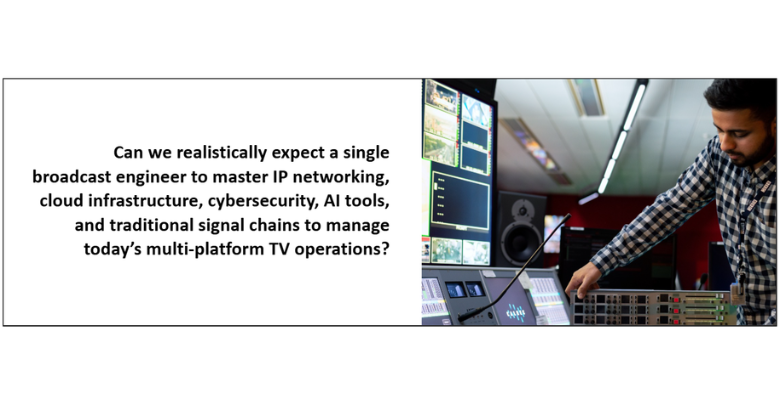
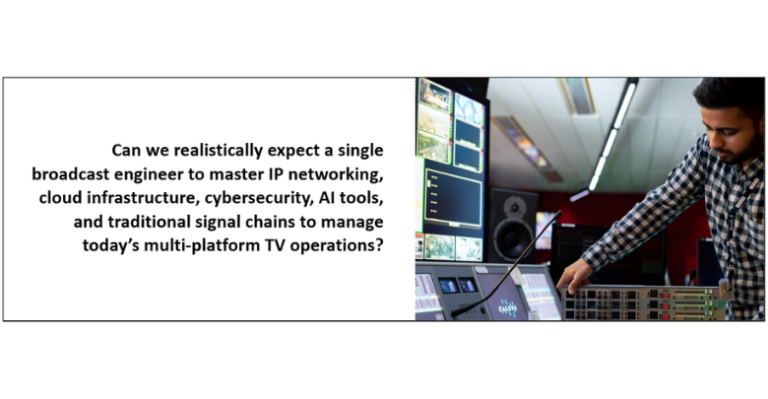
For Paul Whybrow, Governor Asia & Pacific, SMPTE, the question of whether a single broadcast engineer can realistically be expected to master IP networking, cloud infrastructure, cybersecurity, AI tools, and traditional signal chains does not have a simple answer. 

"What's realistic varies a lot depending on the company," Whybrow told APB+. In a small facility or regional station, one engineer may genuinely need to cover the full spectrum simply because there is no one else to do it.

What happens in a larger organisation, however, can differ greatly. “There, the scope gets split across specialised roles — network engineers, cloud and DevOps staff, security teams, and AI/machine learning (ML) specialists working alongside broadcast engineers,” said Whybrow. 

Instead of the industry converging on a single answer about generalist versus specialist, it is a strategic choice that has to be made at the company level.

Whybrow used cloud infrastructure to illustrate the complexity. At a conceptual level, the principles can appear relatively straightforward: media and metadata can be stored, moved, processed, and streamed using on-premises, remote, or hybrid infrastructure. 

The practical reality is considerably more complex, he said. “AWS, Microsoft Azure, and Google Cloud Platform differ technically, operationally, and commercially, with architectures, pricing structures, and data movement charges that can lead to very different engineering decisions.”

Teach engineers how to think, not just what to know

SMPTE's response has been to build a curriculum that acknowledges this complexity without trying to resolve it through a single fixed certification track. The current lineup includes an introduction to IP networks, an Understanding ST 2110 course, and a hands-on IP network design course, often packaged into a three-month online boot camp with live coaching sessions. 

But Whybrow was clear that SMPTE's role is less about dictating what engineers should know and more about maintaining a solid general foundation while actively customising further training as new needs emerge. Coding and development skills, for instance, have come up as a growing area of interest, and SMPTE is now building a DevOps workshop in direct response to demand from companies rather than from a pre-determined curriculum.

That adaptive approach reflects a broader philosophical position on the pace of change. Rather than framing training as a race to keep up, Whybrow described SMPTE's role as being the bridge. “We are an independent, vendor-neutral body that surfaces and organises what the industry is already learning in real time, while also doing the foundational work of developing standards such as ST 2110 that give fast-moving technologies a common framework to build on.”

Bringing the skills challenge into sharper focus, Whybrow recalled a question from a colleague in the education industry: what if the real problem is not that educators are failing to keep up, but that we are asking them to do something that is no longer possible? 

“Technology and workflows are now changing faster than traditional courses and certification programmes can be designed, approved, and delivered. By the time highly specialised training reaches the classroom, parts of it may already be outdated.

“Should educators teach engineers how to think, and employers teach them how to do the job?” he asked.

In the Asia-Pacific region, Whybrow pointed to AI as a potentially significant equaliser that can democratise the ability to design and deploy sophisticated technical workflows across the region.

He elaborated, “In the past, delivering a high-functioning engineering solution required deep, granular knowledge of the underlying technologies. Increasingly, some of that detailed technical work may be handled by AI tools, provided the engineering team can define the problem with sufficient clarity, discipline, and professional judgement.”

This can potentially shift the value from learning technical knowledge towards understanding systems, framing problems and appropriate AI prompts, making sound decisions and rigorously validating outcomes.

Could AI then reduce the need for some forms of deep specialist engineering training, while increasing the importance of judgement, systems thinking, local knowledge, and technical oversight?

“If this is the case, the multi-skilled engineer will be able to be far more capable and operationally able to manage multiple systems incredibly successfully,” said Whybrow.

Skills crisis is really an operational complexity gap

Where SMPTE approaches the skills challenge from the perspective of education and standards, Imagine Communications encounters it daily in the field. Steve Reynolds, CEO of Imagine Communications, offered a more operationally grounded view and pushed back on one of the most common framings of the problem.

"The challenge is significant, but perhaps not in the way it's often characterised," he said.

“At Imagine, we do not generally see broadcasters unable to operate systems they have already invested in because they lack engineers. What we do see is engineering teams being asked to manage far more sophisticated environments than ever before, while navigating one of the industry's largest technology transitions.”

Today's engineering teams, he added, are supporting SDI alongside IP, hybrid cloud, virtualisation, software-defined workflows, streaming platforms, automation, and increasingly AI-assisted operations. Meanwhile, experienced broadcast engineers are retiring, taking decades of operational knowledge with them, while newer entrants bring strong IT and software skills but less traditional broadcast experience.

"From our perspective, this makes the issue as much an operational complexity challenge as a staffing challenge," Reynolds explained. “The objective is not simply to replace retiring engineers one-for-one; it is to enable engineering teams to manage increasingly sophisticated infrastructures more efficiently. 

“That is why orchestration, automation, and software-defined operations have become so important. They reduce manual effort, simplify operations, and allow engineers to focus on delivering services rather than managing infrastructure.”

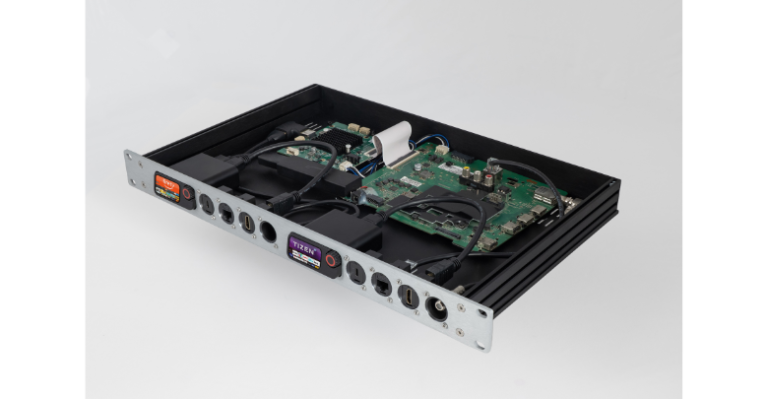
Imagine has also taken the approach of embedding decades of broadcast expertise directly into its products. Capabilities such as PathView in the Magellan Control System and the monitoring capabilities in Prismon draw on operational experience to help engineers identify, diagnose, and resolve issues more quickly, effectively turning broadcast knowledge into features. 

AI, without replacing engineers, builds on the same foundation by supporting monitoring, metadata management, quality control, and operational decision support, helping engineers work faster and focus on higher-value activities.

On the question of who bears responsibility for workforce development, Reynolds was unequivocal. 

"Workforce development isn't the responsibility of any one organisation," he said. “Vendors have a role in sharing expertise around new technologies and workflows. Broadcasters need to invest in mentoring and knowledge transfer within their own teams.

“Industry associations, educational institutions, and training organisations also have an important part to play in creating stronger pathways into the profession.”

Imagine actively participates in initiatives such as the AIMS Education Working Group and supports the IPMX training curriculum, helping prepare the next generation of engineers for IP-based media environments.

The real opportunity, Reynolds argued, lies in bringing complementary strengths together. "Experienced broadcast engineers have decades of operational knowledge, while the next generation brings valuable IT and software expertise. Combining those skill sets — supported by modern tools, automation, AI, and ongoing industry collaboration — will create a workforce that's well equipped for the future of broadcast, media and entertainment."
Join The Community

Join The Community

APB+

x Studio

Connect with your clients by working with our in-house brand studio, using our expertise and media reach to help you create and craft your message in video and podcast, native content and whitepapers, webinars and event formats.

Skills gap: Who will run the broadcast of tomorrow as changing media technology demands new skillsets

Add Your Heading Text Here

By Shaun Lim

The broadcast and media technology industry is undergoing its most significant technical transition in decades. Engineering teams that once managed discrete, hardware-based signal chains are now expected to navigate IP networking, cloud infrastructure, cybersecurity, software-defined workflows, and increasingly AI-assisted operations, often simultaneously and with fewer people than before.

At the same time, a generational shift is quietly compounding the pressure, with experienced broadcast engineers retiring faster than they can be replaced.

For Paul Whybrow, Governor Asia & Pacific, SMPTE, the question of whether a single broadcast engineer can realistically be expected to master IP networking, cloud infrastructure, cybersecurity, AI tools, and traditional signal chains does not have a simple answer. 

"What's realistic varies a lot depending on the company," Whybrow told APB+. In a small facility or regional station, one engineer may genuinely need to cover the full spectrum simply because there is no one else to do it.

What happens in a larger organisation, however, can differ greatly. “There, the scope gets split across specialised roles — network engineers, cloud and DevOps staff, security teams, and AI/machine learning (ML) specialists working alongside broadcast engineers,” said Whybrow. 

Instead of the industry converging on a single answer about generalist versus specialist, it is a strategic choice that has to be made at the company level.

Whybrow used cloud infrastructure to illustrate the complexity. At a conceptual level, the principles can appear relatively straightforward: media and metadata can be stored, moved, processed, and streamed using on-premises, remote, or hybrid infrastructure. 

The practical reality is considerably more complex, he said. “AWS, Microsoft Azure, and Google Cloud Platform differ technically, operationally, and commercially, with architectures, pricing structures, and data movement charges that can lead to very different engineering decisions.”

Teach engineers how to think, not just what to know

SMPTE's response has been to build a curriculum that acknowledges this complexity without trying to resolve it through a single fixed certification track. The current lineup includes an introduction to IP networks, an Understanding ST 2110 course, and a hands-on IP network design course, often packaged into a three-month online boot camp with live coaching sessions. 

But Whybrow was clear that SMPTE's role is less about dictating what engineers should know and more about maintaining a solid general foundation while actively customising further training as new needs emerge. Coding and development skills, for instance, have come up as a growing area of interest, and SMPTE is now building a DevOps workshop in direct response to demand from companies rather than from a pre-determined curriculum.

That adaptive approach reflects a broader philosophical position on the pace of change. Rather than framing training as a race to keep up, Whybrow described SMPTE's role as being the bridge. “We are an independent, vendor-neutral body that surfaces and organises what the industry is already learning in real time, while also doing the foundational work of developing standards such as ST 2110 that give fast-moving technologies a common framework to build on.”

Bringing the skills challenge into sharper focus, Whybrow recalled a question from a colleague in the education industry: what if the real problem is not that educators are failing to keep up, but that we are asking them to do something that is no longer possible? 

“Technology and workflows are now changing faster than traditional courses and certification programmes can be designed, approved, and delivered. By the time highly specialised training reaches the classroom, parts of it may already be outdated.

“Should educators teach engineers how to think, and employers teach them how to do the job?” he asked.

In the Asia-Pacific region, Whybrow pointed to AI as a potentially significant equaliser that can democratise the ability to design and deploy sophisticated technical workflows across the region.

He elaborated, “In the past, delivering a high-functioning engineering solution required deep, granular knowledge of the underlying technologies. Increasingly, some of that detailed technical work may be handled by AI tools, provided the engineering team can define the problem with sufficient clarity, discipline, and professional judgement.”

This can potentially shift the value from learning technical knowledge towards understanding systems, framing problems and appropriate AI prompts, making sound decisions and rigorously validating outcomes.

Could AI then reduce the need for some forms of deep specialist engineering training, while increasing the importance of judgement, systems thinking, local knowledge, and technical oversight?

“If this is the case, the multi-skilled engineer will be able to be far more capable and operationally able to manage multiple systems incredibly successfully,” said Whybrow.

Skills crisis is really an operational complexity gap

Where SMPTE approaches the skills challenge from the perspective of education and standards, Imagine Communications encounters it daily in the field. Steve Reynolds, CEO of Imagine Communications, offered a more operationally grounded view and pushed back on one of the most common framings of the problem.

"The challenge is significant, but perhaps not in the way it's often characterised," he said.

“At Imagine, we do not generally see broadcasters unable to operate systems they have already invested in because they lack engineers. What we do see is engineering teams being asked to manage far more sophisticated environments than ever before, while navigating one of the industry's largest technology transitions.”

Today's engineering teams, he added, are supporting SDI alongside IP, hybrid cloud, virtualisation, software-defined workflows, streaming platforms, automation, and increasingly AI-assisted operations. Meanwhile, experienced broadcast engineers are retiring, taking decades of operational knowledge with them, while newer entrants bring strong IT and software skills but less traditional broadcast experience.

"From our perspective, this makes the issue as much an operational complexity challenge as a staffing challenge," Reynolds explained. “The objective is not simply to replace retiring engineers one-for-one; it is to enable engineering teams to manage increasingly sophisticated infrastructures more efficiently. 

“That is why orchestration, automation, and software-defined operations have become so important. They reduce manual effort, simplify operations, and allow engineers to focus on delivering services rather than managing infrastructure.”

Imagine has also taken the approach of embedding decades of broadcast expertise directly into its products. Capabilities such as PathView in the Magellan Control System and the monitoring capabilities in Prismon draw on operational experience to help engineers identify, diagnose, and resolve issues more quickly, effectively turning broadcast knowledge into features. 

AI, without replacing engineers, builds on the same foundation by supporting monitoring, metadata management, quality control, and operational decision support, helping engineers work faster and focus on higher-value activities.

On the question of who bears responsibility for workforce development, Reynolds was unequivocal. 

"Workforce development isn't the responsibility of any one organisation," he said. “Vendors have a role in sharing expertise around new technologies and workflows. Broadcasters need to invest in mentoring and knowledge transfer within their own teams.

“Industry associations, educational institutions, and training organisations also have an important part to play in creating stronger pathways into the profession.”

Imagine actively participates in initiatives such as the AIMS Education Working Group and supports the IPMX training curriculum, helping prepare the next generation of engineers for IP-based media environments.

The real opportunity, Reynolds argued, lies in bringing complementary strengths together. "Experienced broadcast engineers have decades of operational knowledge, while the next generation brings valuable IT and software expertise. Combining those skill sets — supported by modern tools, automation, AI, and ongoing industry collaboration — will create a workforce that's well equipped for the future of broadcast, media and entertainment."
Join The Community

Stay Connected

Facebook

101K

Twitter

3.9K

Instagram

1.7K

LinkedIn

19.9K

YouTube

0.2K

Subscribe to the latest news now!


    Scroll to Top