



As high dynamic range (HDR) production accelerates across live sports and premium events, broadcasters are under increasing pressure to support HDR delivery without disrupting existing standard dynamic range (SDR) services.
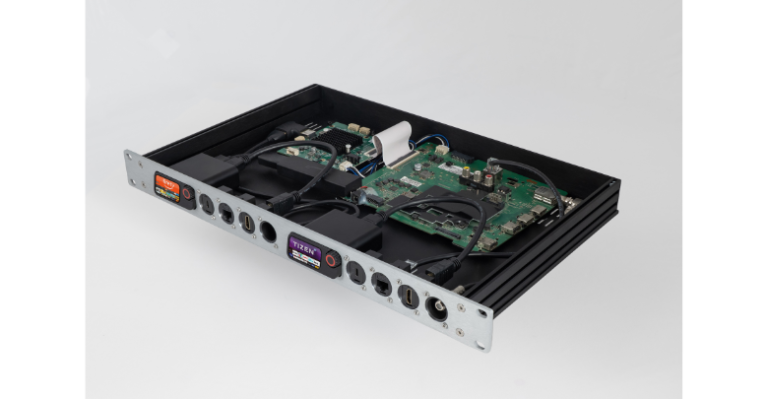
BCNEXXT has responded by deploying live hybrid log-gamma (HLG)-based HDR playout capabilities within its Vipe platform, allowing broadcasters to integrate HDR into live production workflows while maintaining parallel SDR distribution paths. The implementation is tailored to real-world broadcast environments where HDR and SDR audiences must co-exist, particularly in live sports, where HDR origination is becoming more common.
Vipe now supports 4K/Ultra HD (UHD) 2160p BT.2100 HLG live ingest and playout. File-based content is rendered into HLG during pre-processing to ensure visual consistency across programming and commercial insertion, reducing noticeable quality shifts between live feeds and advertisements. Rather than positioning HDR as a universal feature upgrade, BCNEXXT is focusing on workflow architecture and disciplined deployment.
“In classic broadcasting fashion, we’ve adopted four different HDR standards,” said Graham Sharp, Vice-President of Sales & Marketing, BCNEXXT. “The formats themselves are relatively easy to understand. The real complexity comes from cross-conversion and managing HDR and SDR simultaneously.”
Live sports are increasingly produced in HDR, particularly using HLG, which was designed for live broadcast environments. However, most broadcasters must continue serving SDR households, creating operational complexity. HDR content may require SDR down-conversion for legacy distribution, while SDR-originated commercials often need up-conversion to avoid visible brightness or colour changes during ad breaks.
BCNEXXT’s current deployments prioritise receiving and playing out live HLG feeds directly, while converting file-based assets into HLG ahead of transmission. In many cases, users provide a parallel SDR feed from the venue or production facility, eliminating unnecessary HDR-to-SDR conversion within the playout chain.
“That round-trip conversion is where risk lives,” Sharp explained. “HDR implementation is all about the workflow and minimising unnecessary format movement and cross conversion.”
Instead of applying a one-size-fits-all strategy, Vipe is configured according to each broadcaster’s operational model, distribution endpoints, and commercial requirements.
The organisation’s approach centres on supporting HDR where it delivers measurable production value, maintaining visual consistency across live programming and advertising, and enabling HDR and SDR services to co-exist without adding workflow strain.